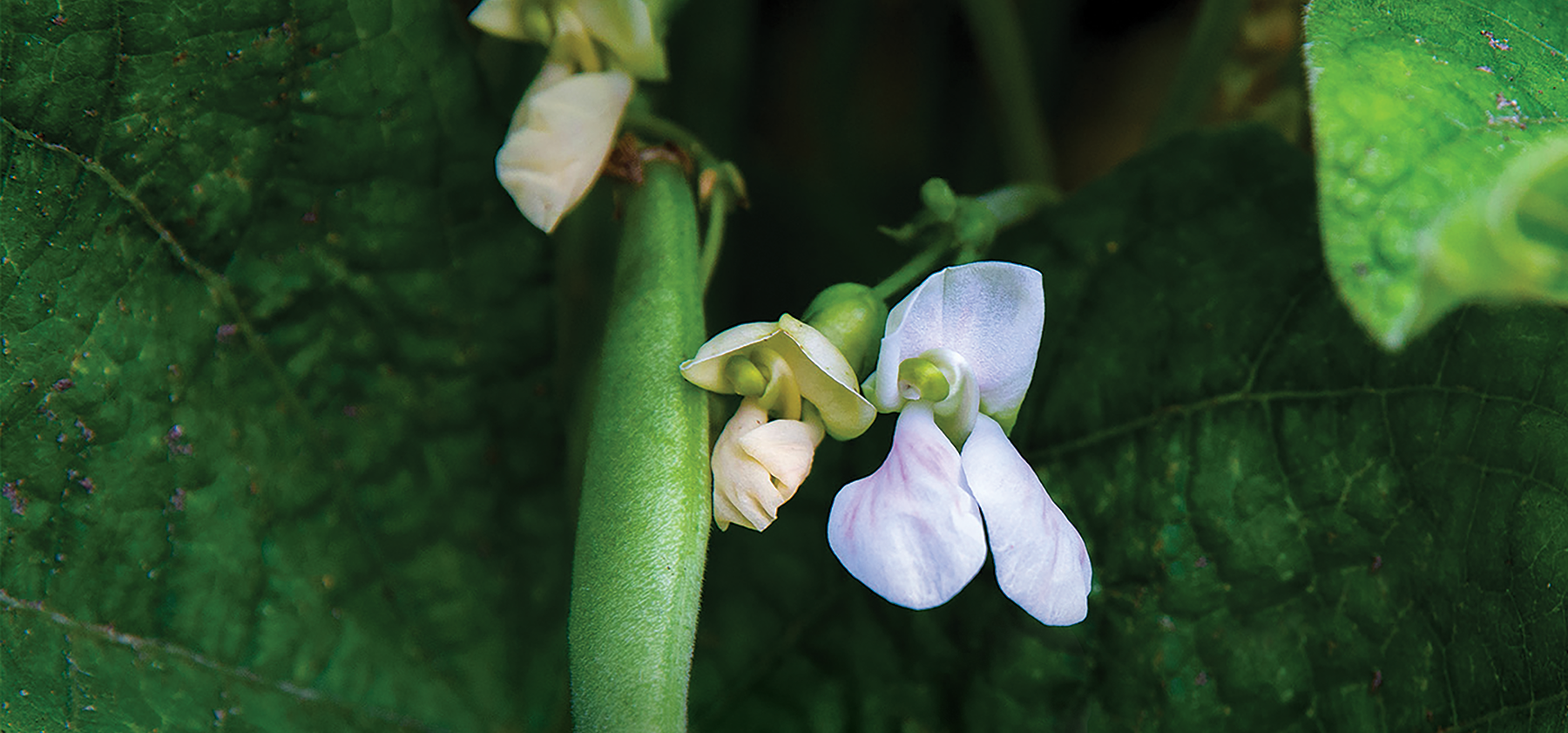
Kidney Bean: Whole Food Profile
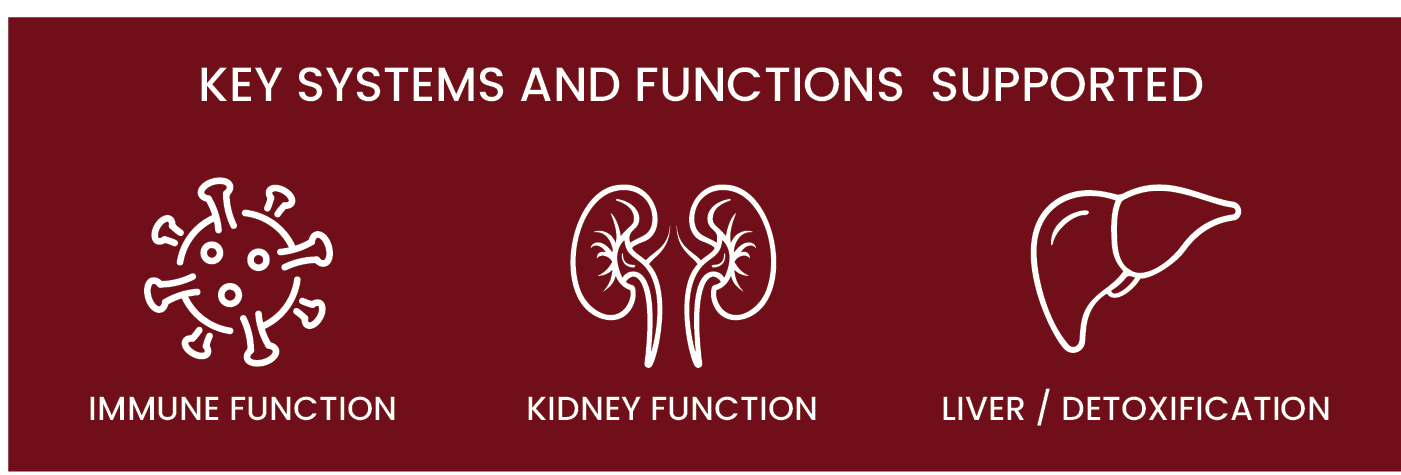
The fruits and aerial parts of the common kidney bean (Phaseolus vulgaris), as part of the whole food matrix, they are rich with key vitamins and minerals, including magnesium, folate, thiamin and iron, that support kidney, immune, and liver function.
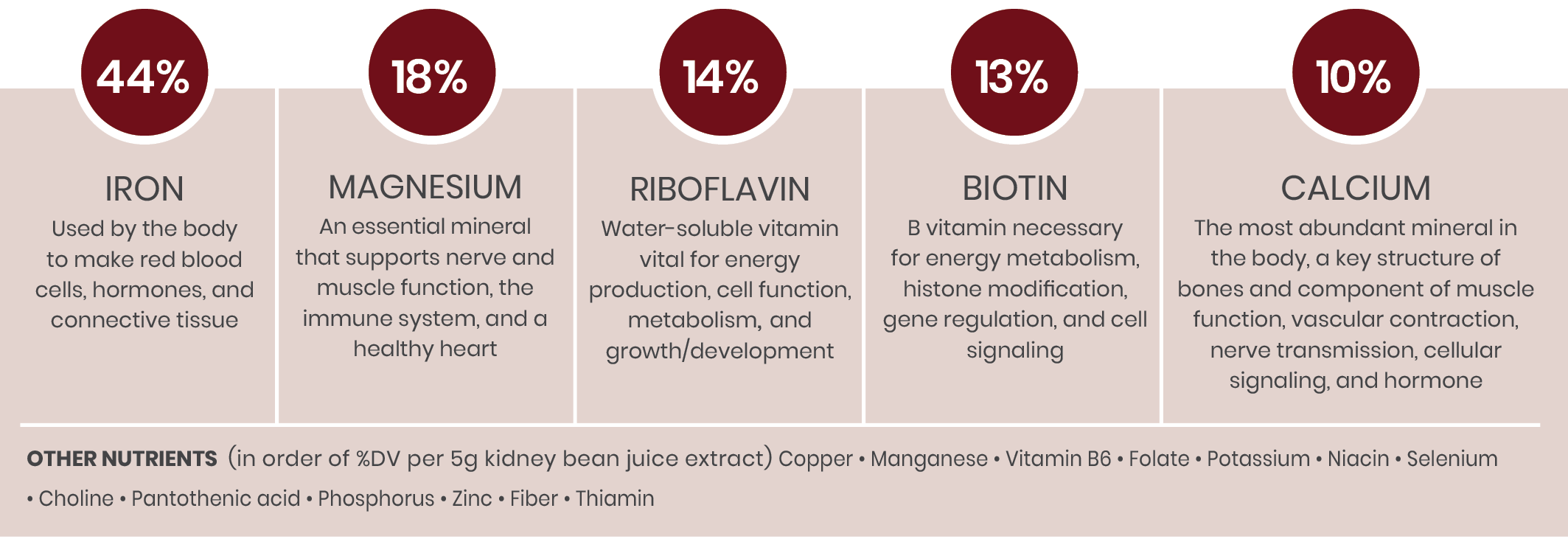
Key Nutrients
Percentages shown as %DV per serving of 5g kidney bean juice extract.
Phytoactives in Kidney Bean
Saponins
Support the immune system, healthy cholesterol levels, and blood glucose levels
Chlorophyll
Green pigment in plants with potential anti-inflammatory, antioxidant, and anti-bacterial activity
Lignans
Polyphenolic compounds metabolized by gut bacteria that support antioxidant activity
Phenolic Acids
Compounds that promote antioxidant activity and vascular health
Isoflavonoids
Phenolic compounds with direct antioxidant effects
Flavonols
Promote antioxidant activity, vascular health, anti-cancer, antimicrobial, and anti-inflammatory
- Kaempferol
- Quercetin
- Rutin
Total Phenolic Content
The total phenolic compounds, such as flavonoids and tannins, support kidney and liver function while enhancing immune response through antioxidant protection. Learn more about nutrient density in our A-Z nutrition alphabet.
- Total Phenolics 24.6mg/g**
*Data is mean values from Phenol-Explorer Database1
**Data on file with WholisticMatters. Values subject to change based on strain and experimental methods
Did you know WholisticMatters is powered by Standard Process? Learn more about Standard Process’ whole food-based nutrition philosophy.
Lloyd CM, Marsland BJ. Lung Homeostasis: Influence of Age, Microbes, and the Immune System. Immunity. 2017;46(4):549-61. doi: https://doi.org/10.1016/j.immuni.2017.04.005.
Ramabulana, T., Mavunda, R. D., Steenkamp, P. A., Piater, L. A., Dubery, I. A., & Madala, N. E. (2015). Secondary metabolite perturbations in Phaseolus vulgaris leaves due to gamma radiation. Plant Physiology and Biochemistry, 97, 287-295. doi:https://doi.org/10.1016/j.plaphy.2015.10.018
Rothwell, J.A., et al., Phenol-Explorer 3.0: a major update of the Phenol-Explorer database to incorporate data on the effects of food processing on polyphenol content.
Database, 2013. 2013: p. bat070-bat070.