Hops, Feverfew, and the Bitter Path to GLP-1
Something interesting happened in the world of bitters this year. In a 24-week clinical trial, adults with overweight or obesity received lifestyle guidance alongside a bitter botanical extract. Over the course of the study, participants lost an average of 4.3% of their body weight. Fat mass declined, hunger and cravings were reduced, and reported energy intake decreased.¹
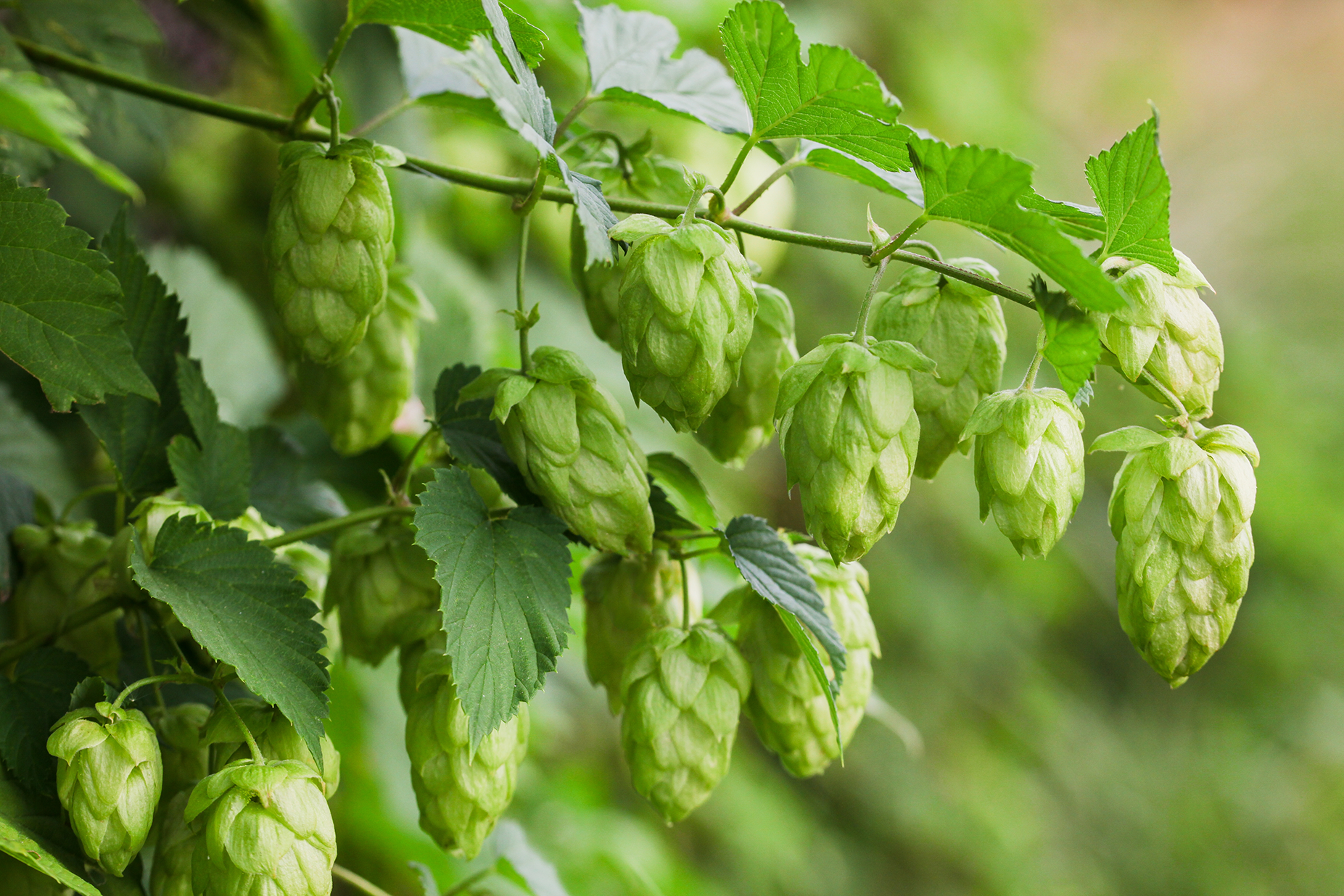
And the bitter plant at the center of the study was hops, Humulus lupulus.
The changes were modest, but they unfolded across six months, making the study an intriguing addition to a much older story. Long before researchers could measure gut peptides or identify bitter taste receptors, clinical herbalists were paying attention to what happened when bitter plants were used around the meal.
Bitters Before Biomarkers
Bitter herbs have occupied a practical place in digestive care for generations. In herbal medicine, gentian, dandelion, artichoke, wormwood, hops, and other distinctly bitter plants are familiar tools for what we might think of as digestive tuning. They are used to encourage appetite and digestive secretions, support the digestion of richer foods, and address familiar complaints such as gas, bloating, and indigestion.²
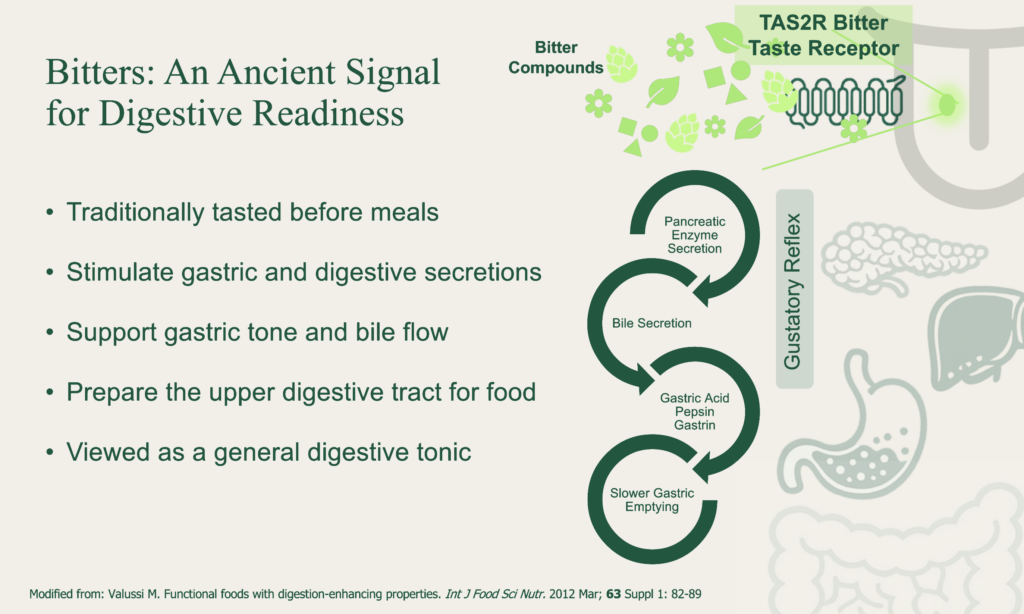
But the reach of bitter herbs has never stopped with digestion. In the herbal clinic, bitter plants have also long been used in approaches to blood sugar and metabolic health. Practitioners recognized a relationship between bitter plants, digestion, appetite, and metabolic function long before they could describe the physiology in terms of receptors and gut peptides. Now we have another lens through which to understand that relationship. Research into intestinal bitter receptors is revealing connections between bitter sensing, enteroendocrine signaling, GLP-1, and glucose metabolism.³
For the herbalist, the taste itself has always been important. Modern physiology offers one explanation for why: the gustatory reflex, in which tasting bitter initiates sensory and autonomic responses that help prepare the digestive system for food. But modern physiology has given us a much bigger picture of where bitter sensing takes place.
Why Would the Gut Need Taste Receptors?
Humans have approximately 25 functional bitter taste receptors, collectively known as the TAS2R family. We first came to understand them through taste, but researchers have since found these receptors far beyond the tongue, in tissues throughout the body as well as the gastrointestinal tract.⁴ That raises a wonderfully strange question: why would we need taste receptors somewhere we cannot consciously taste?
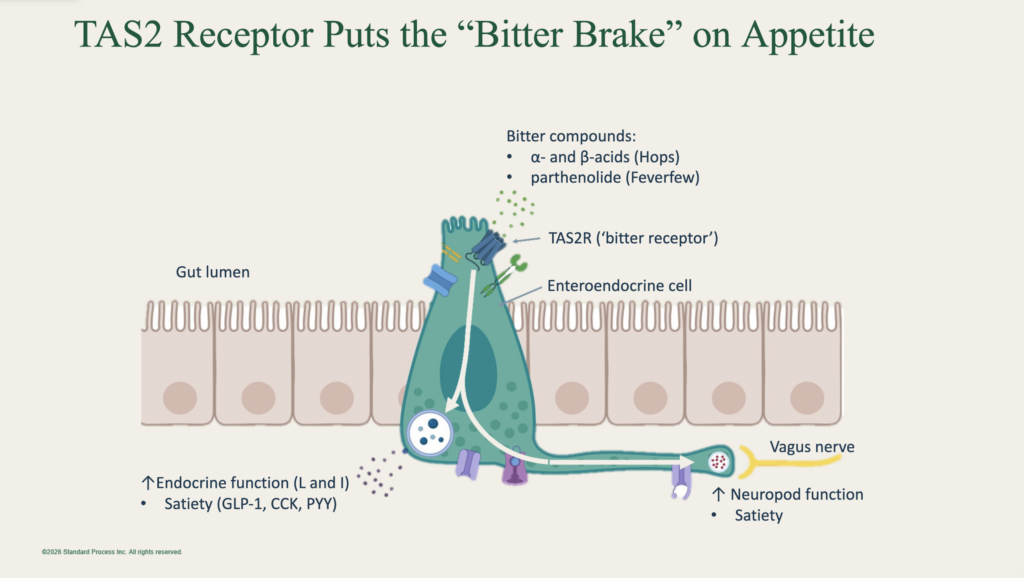
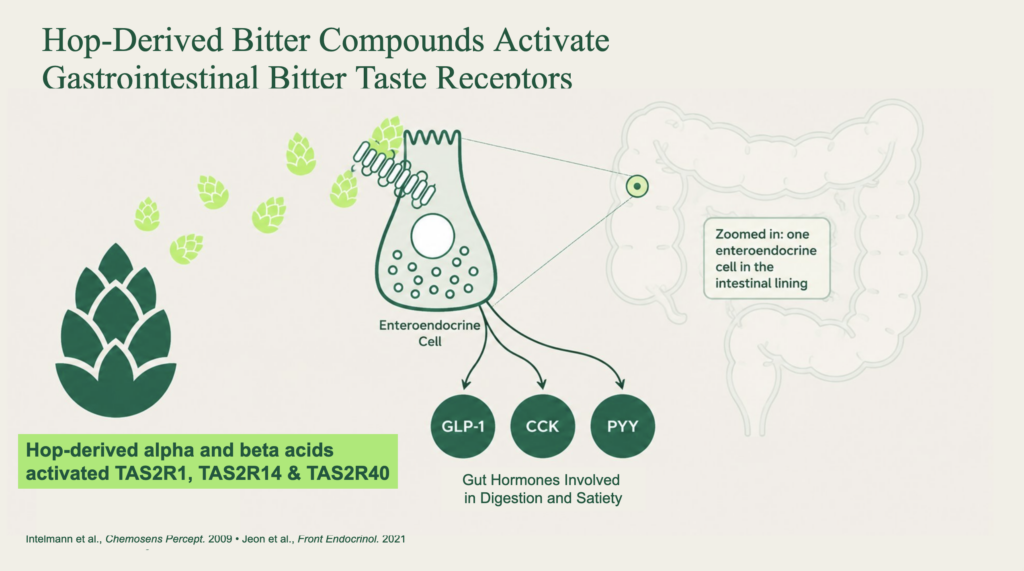
In the gut, TAS2Rs are found on enteroendocrine cells, specialized cells involved in sensing the chemical environment of the intestine.⁴ It is almost as if these gut cells have their own bitter “taste buds.” But in the gut, sensing chemistry serves a different purpose. Bitter receptors are not creating a taste we consciously perceive. They are helping the gut recognize what is there so that it can respond appropriately to what is passing through. And one way the gut responds is by sending hormonal signals.
The GLP-1 Connection
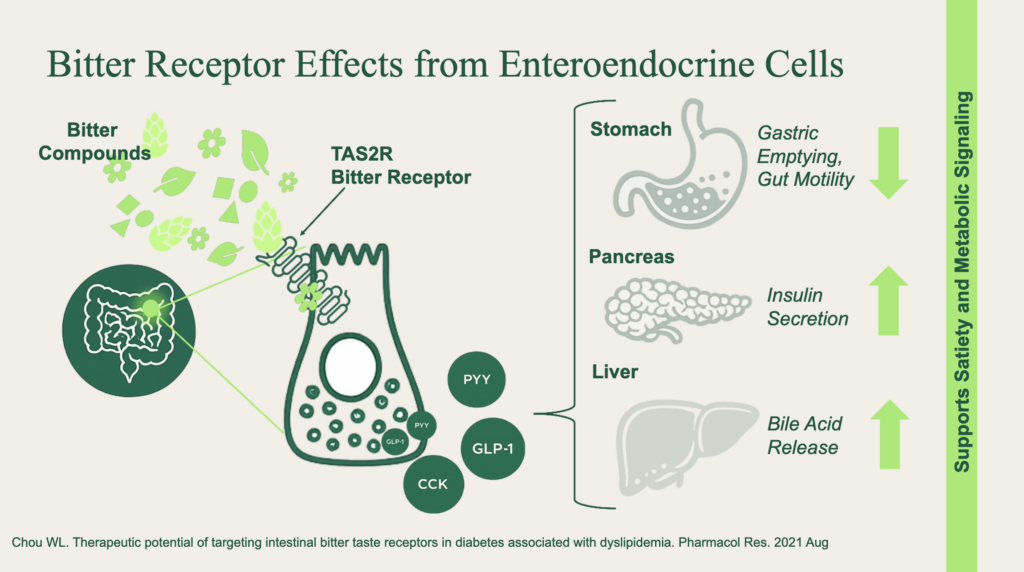
Enteroendocrine cells release a range of peptide hormones that help coordinate what happens during and after a meal, including GLP-1, CCK, and PYY. GLP-1 has attracted particular attention for its role in glucose regulation, gastric emptying, and satiety. CCK contributes to digestion and helps signal satiation as we eat, while PYY helps sustain the sense of satiety that follows.
Bitter chemistry can be one of the signals that sets that response in motion. When bitter compounds activate TAS2Rs on enteroendocrine cells, they can influence the release of gut peptides, including GLP-1, CCK, and PYY.⁴ A bitter compound, then, can be recognized without out ever “tasting” it there, yet that recognition can still become a hormonal message. And this is where the plants become especially interesting, because not every bitter compound presses the same buttons.
Not All Bitters Strike the Same Keys
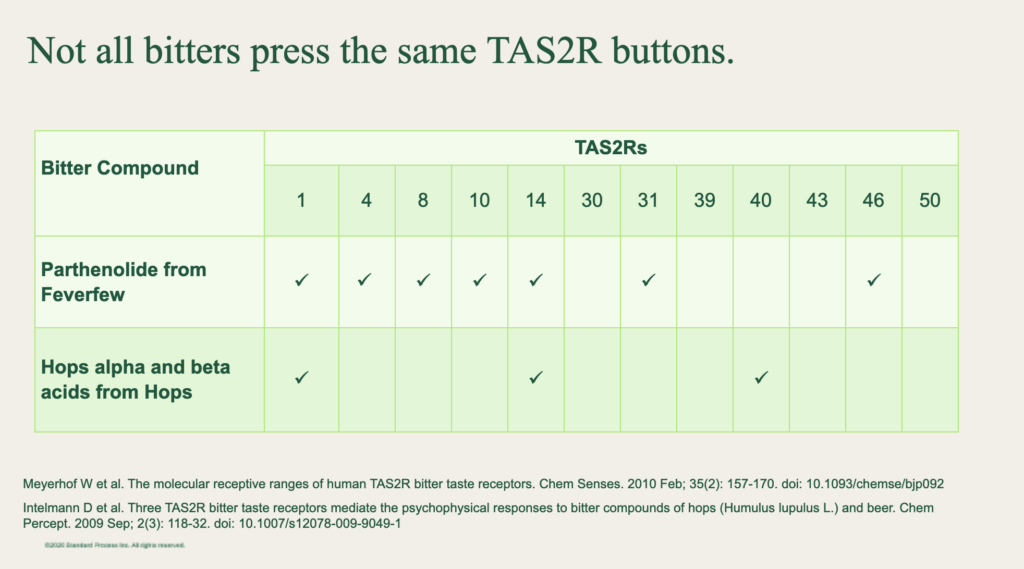
“Bitter” may sound like a single taste, but chemically it is anything but simple. Our roughly 25 bitter receptors differ in the compounds they recognize, and bitter phytochemicals differ in the receptors they activate.⁵ Some receptors respond to only a narrow range of bitter compounds, while others are much more broadly tuned. Think of the bitter receptors as a keyboard, with different bitter molecules striking different combinations of keys.
Hops and feverfew make a wonderful pair for exploring that difference. Both are unmistakably bitter plants, yet their bitterness arises from very different phytochemistry. Hop-derived bitter compounds have been shown to interact with a particular group of TAS2Rs, while parthenolide, one of feverfew’s characteristic sesquiterpene lactones, interacts with a broader receptor profile.⁵˒⁶ The point is not that one plant is more bitter or more powerful than the other. The tongue calls them both bitter, but at the receptor level, they are playing very different combinations of keys.
Hops: From Bitter Chemistry to Human Research
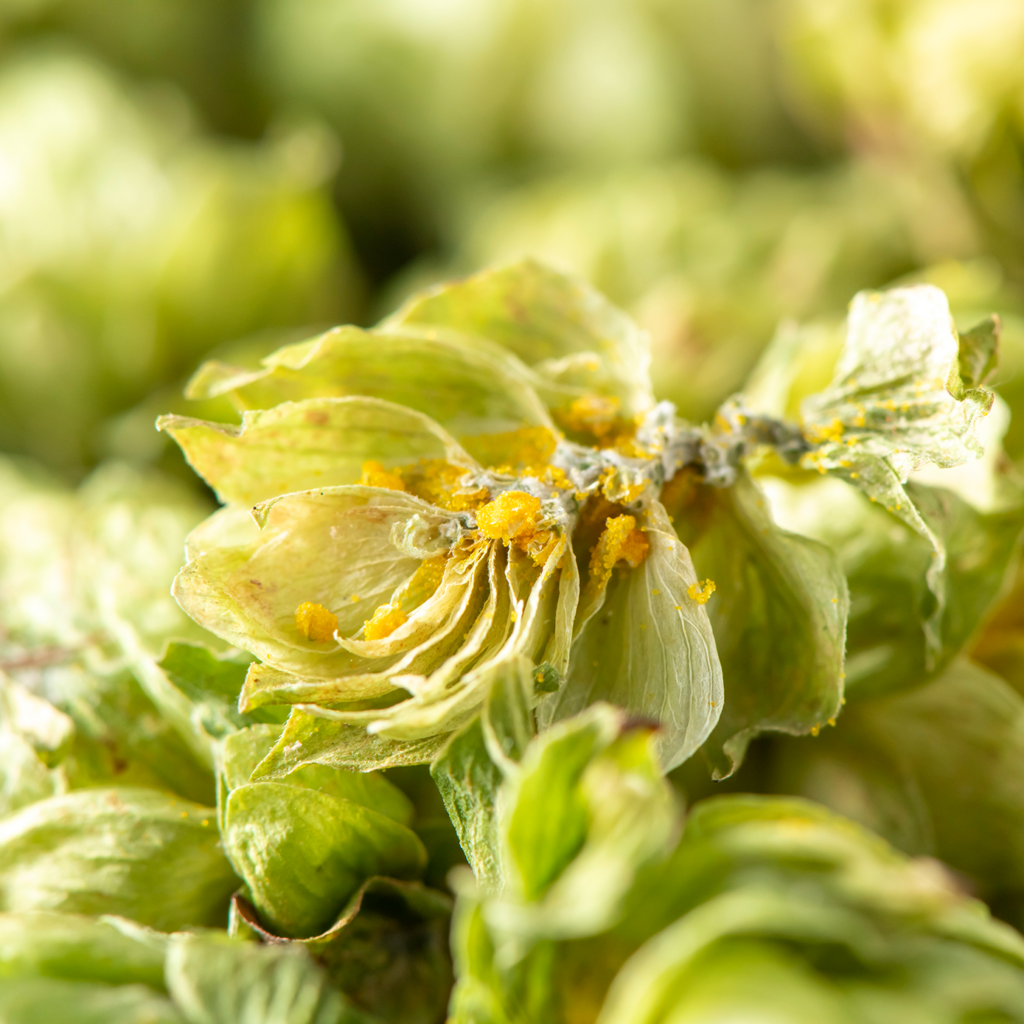
Hops (Humulus lupulus) is probably best known as the bittering ingredient in beer, but for an herbalist, the strobile itself is worth a closer look. Pull apart its papery green bracts and you find the yellow, sticky lupulin glands inside, rich in aromatic resins and the alpha and beta acids responsible for much of the plant’s characteristic bitterness. That bitter chemistry has now made its way into some compelling human research. The hop extracts studied were standardized for their alpha and beta bitter acids, giving researchers a defined preparation to work with.
Human research offered a chance to see whether that bitter chemistry translated into measurable changes in satiety signaling. In one acute crossover trial, 19 healthy-weight men received a single 500 mg dose of bitter hop extract. Blood measurements showed increased responses of GLP-1, CCK, and PYY compared with placebo. When the men were later offered lunch and an afternoon snack, they consumed about 17% less energy, a little over 200 fewer calories, than with placebo.⁷
A second study extended the story from gut peptides and food intake to hunger and cravings. During a 24-hour water-only fast, 30 healthy women received bitter hop extract. The extract reduced hunger and food cravings, and when the women broke their fast, they ate up to 14% less than with placebo. Even the kinds of foods they craved shifted, with fewer savory cravings before the meal and fewer cravings for sweets afterward.⁸
The next question was what might happen over a much longer period, which brings us back to where this article began. In the recent 24-week trial, 150 men and women with overweight or obesity entered a lifestyle-based weight-loss program and received either placebo or 500 mg of bitter hop extract daily, divided before their two main meals. By 24 weeks, the hop group had lost 4.3% of their starting body weight and 4.5 kg of fat mass. Visceral fat declined as well, while skeletal muscle mass was preserved. Hunger and several measures of food craving decreased, and reported energy intake fell.¹
Study by study, a fuller picture of hops begins to emerge. A single dose produced measurable changes in GLP-1, CCK, and PYY, followed by reduced food intake. During a prolonged fast, the extract influenced hunger and cravings and reduced how much women ate when the fast ended. And over six months, those appetite-related effects were accompanied by meaningful changes in body weight and body composition.
Feverfew: Playing More Than One Bitter Key

Anyone who has grown feverfew (Tanacetum parthenium) knows its bitterness. Nibble even the tiniest bit of a fresh leaf and there is no mistaking it. That intense taste reflects, in part, the plant’s sesquiterpene lactones, including parthenolide.
Parthenolide gives us an especially interesting example of just how complex bitter sensing can be. In receptor-screening research, it activated at least seven members of the human TAS2R family.⁵ In other words, the bitterness we experience as one sensation can represent activity across a surprisingly broad collection of bitter receptors.
More recent research has taken that story into the laboratory and focused specifically on TAS2R4. Using a human intestinal cell model, researchers found that parthenolide activated TAS2R4 and increased GLP-1 secretion in a dose-dependent manner.⁹ This gives us a remarkably close look at one bitter compound from feverfew interacting with a specific bitter receptor and influencing GLP-1 release.
Hops and feverfew give us two very different windows into bitter physiology. With hops, we can follow bitter compounds into human studies of gut peptides, appetite, cravings, and food intake. With feverfew, we can zoom in much closer and see one of its characteristic bitter compounds interact with a specific receptor involved in GLP-1 release. The two plants remind us that a taste we experience simply as “bitter” can represent remarkably different chemistry and receptor activity.
From Bitter Physiology to Clinical Practice
The emerging research on hops and feverfew is giving us a much more detailed picture of bitter physiology. Bitter receptors in the gastrointestinal tract can participate in the release of GLP-1 and other gut peptides, but the plants that activate those receptors are far from interchangeable.
That may be one of the most interesting lessons for clinicians. Different bitter plants bring different chemistry, engage different combinations of receptors, and may ultimately produce different physiological responses. For practitioners accustomed to thinking about bitters as a broad therapeutic category, that specificity gives us another way to think about plant selection. Hops and feverfew give us just two examples of how much can be hidden inside the simple word bitter.
Bitter receptor research is opening the door to a more nuanced clinical conversation about metabolic care. For patients seeking support with blood sugar, appetite regulation, or weight management, hops and feverfew offer two particularly interesting examples of how bitter phytochemistry may interact with sensory and hormonal pathways the body already uses to respond to food.
With hops and feverfew, bitter is not simply a taste. It is the beginning of a physiological conversation.
Did you know WholisticMatters is powered by Standard Process? Learn more about Standard Process’ whole food-based nutrition philosophy.

Locate Professional Health Solutions Nearby
Looking for high-quality, practitioner-recommended health solutions? Locate authorized Standard Process practitioners in your area and gain access to premium health services to support your wellness journey.
Find A Participating Practitioner
- Walker E, Lo K, Smirk I, et al. Bitter hop nutraceutical stimulates fat mass loss while preserving muscle mass in a cohort of individuals with overweight or obesity receiving diet and exercise advice. Obes Pillars. 2026;19:100299. doi:10.1016/j.obpill.2026.100299.
- Valussi M. Functional foods with digestion-enhancing properties. Int J Food Sci Nutr. 2012;63(suppl 1):82-89. doi:10.3109/09637486.2011.627841.
- Komarnytsky S, Mhawish R, Wagner C. Activation of extraoral bitter taste receptors by herbs and spices in the regulation of incretin signaling and glucose metabolism. Nutr Rev. 2026;84(suppl 1):37-48. doi:10.1093/nutrit/nuag031.
- Sternini C, Rozengurt E. Bitter taste receptors as sensors of gut luminal contents. Nat Rev Gastroenterol Hepatol. 2025;22(1):39-53. doi:10.1038/s41575-024-01005-z.
- Meyerhof W, Batram C, Kuhn C, et al. The molecular receptive ranges of human TAS2R bitter taste receptors. Chem Senses. 2010;35(2):157-170. doi:10.1093/chemse/bjp092.
- Intelmann D, Batram C, Kuhn C, Haseleu G, Meyerhof W, Hofmann T. Three TAS2R bitter taste receptors mediate the psychophysical responses to bitter compounds of hops (Humulus lupulus L.) and beer. Chemosens Percept. 2009;2(3):118-132. doi:10.1007/s12078-009-9049-1.
- Walker EG, Lo KR, Pahl MC, et al. An extract of hops (Humulus lupulus L.) modulates gut peptide hormone secretion and reduces energy intake in healthy-weight men: a randomized, crossover clinical trial. Am J Clin Nutr. 2022;115(3):925-940. doi:10.1093/ajcn/nqab418.
- Walker E, Lo K, Gopal P. Gastrointestinal delivery of bitter hop extract reduces appetite and food cravings in healthy adult women undergoing acute fasting. Obes Pillars. 2024;11:100117. doi:10.1016/j.obpill.2024.100117.
- Li S, Chen Y, Song Z, et al. Parthenolide promotes glucagon-like peptide-1 secreting in human Caco-2 cells via regulation of bitter taste receptor-induced of calcium signaling. Mol Cell Biochem. 2026;481(2):775-789. doi:10.1007/s11010-025-05425-6.