The Forgotten Biology of Fullness: Supporting Endogenous GLP-1 and Satiety Signals
GLP-1 seems to be everywhere. Once largely the language of endocrinology and gastrointestinal physiology, glucagon-like peptide-1 has entered everyday conversations about appetite, blood sugar, weight, and metabolic health. Yet the physiology behind all this attention is anything but new. Our bodies have been producing GLP-1 in response to food long before we had a name for it. This naturally occurring endogenous GLP-1 is part of the body’s normal response to eating. And its story begins right where we might expect: in the gut.
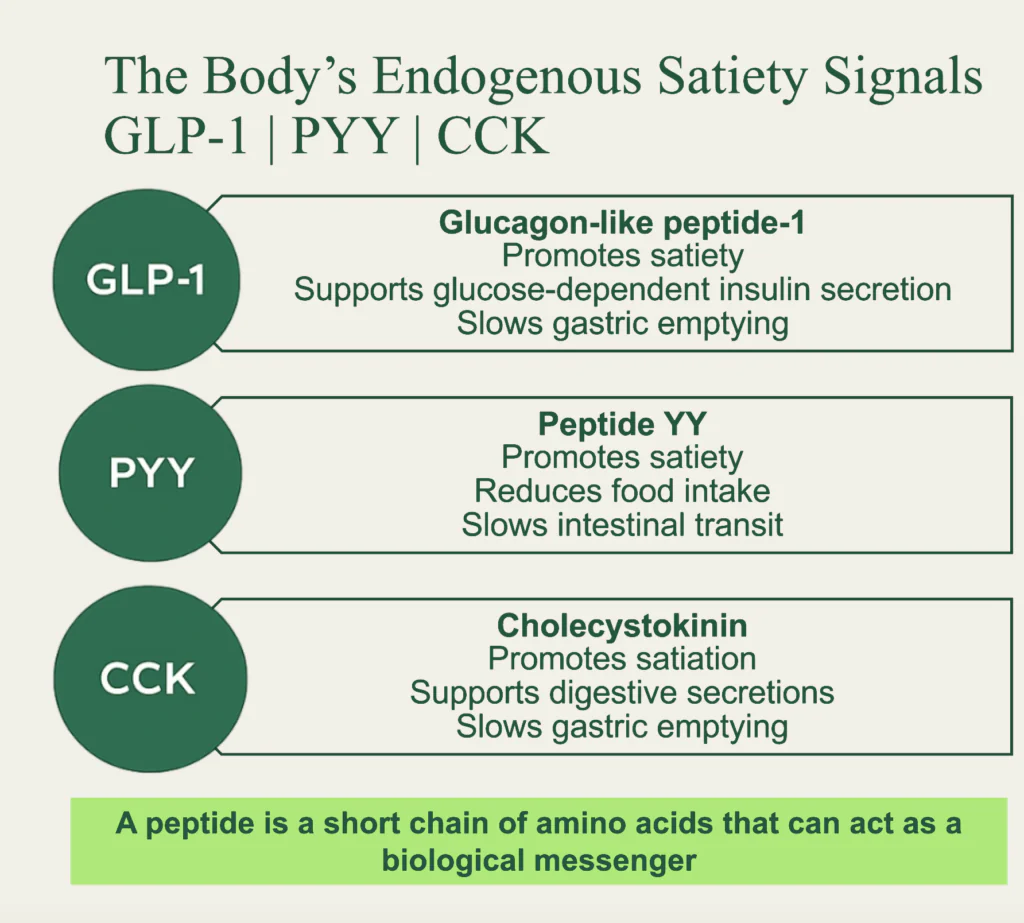
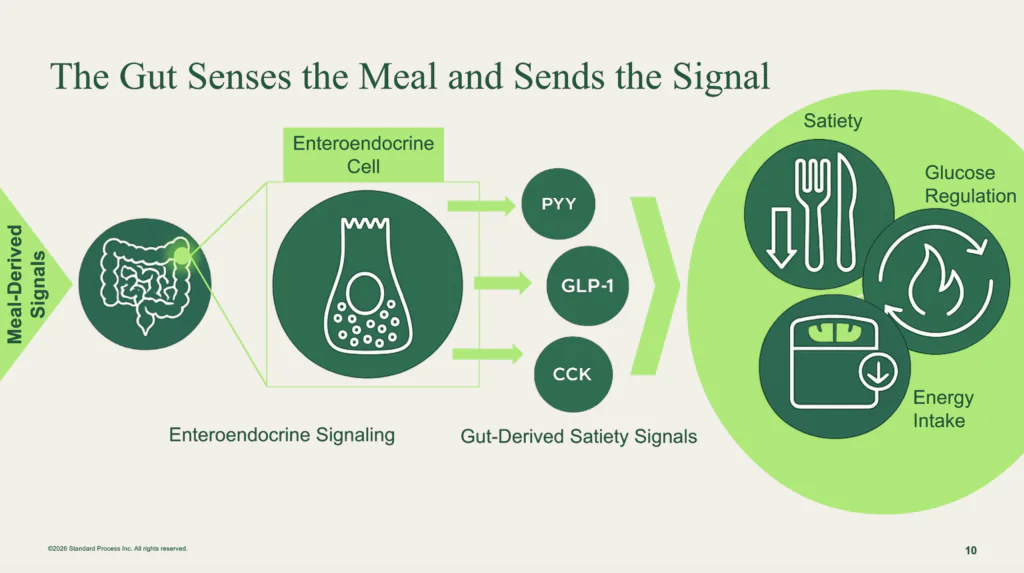
Tucked away in the digestive lining, specialized enteroendocrine cells are paying attention to what passes through the gut. They sense nutrients and other compounds and release chemical messengers that help coordinate the body’s response to food. GLP-1 is one of the best known of these satiety messengers, but it does not work alone. Cholecystokinin (CCK), peptide YY (PYY), gastric signals, and neural pathways all take part in the experience we simply know as fullness.
In a well-tuned system, satiation and satiety can feel quite familiar. Satiation is that point during a meal when another bite no longer sounds appealing. We have had enough. Satiety carries that sense of satisfaction forward, like a good lunch that holds us comfortably through the afternoon. Modern life, however, can make these signals harder to recognize. What we eat, when we eat, how we sleep and move, and even the state of the nervous system can all influence this finely tuned conversation.
The Signals on the Plate: How Protein, Fiber and Fats Influence GLP-1 Activity
The gut responds differently depending on what arrives. Protein, fat, carbohydrate, fiber, and even certain tastes can each shape the digestive and endocrine response that follows. Protein is an important part of that response. Protein-rich meals can stimulate GLP-1 and other satiety-related hormones.¹ On the plate, this gives us another reason to make protein a meaningful part of the meal. The same thinking can extend to a snack or smoothie, where a good source of protein can help make it more satisfying.

Fiber brings another dimension to the satiety story. Soluble and fermentable fibers provide food for the intestinal microbiota, which transform them into short-chain fatty acids that can interact with receptors involved in enteroendocrine signaling and GLP-1 release.² In practice, this points us back toward familiar whole-food sources of fiber, including vegetables, fruits, legumes, whole grains, nuts, and seeds. For practitioners, helping patients steadily increase the amount and diversity of fiber in the diet is one way to support the microbial side of the satiety conversation.
Dietary fats bring another set of signals to the gut. Unsaturated fatty acids can interact with fatty-acid sensing pathways involved in GLP-1 release.³ This gives us another reason to pay attention to the kinds of fats we choose. Omega-3-rich foods, including fatty fish, offer a familiar way to bring healthy, unsaturated fats to the plate.
Put this against the backdrop of today’s standard American diet, and the satiety lens may begin to blur. Dietary patterns dominated by ultra-processed foods tend to bring less fiber and protein, more refined and energy-dense foods, and a different balance of fats. We may be consuming plenty of calories while giving less attention to the very components of food that help support satiation and satiety. Perhaps part of the modern satiety story is not simply what we are eating, but which signals are increasingly missing from the plate.
The Long-Lost Bitter Signal : Bitter Receptors and GLP-1 Activity
One signal that has become less familiar on the modern plate is bitter itself. As our food landscape has shifted toward sweetness, mildness, and easy palatability, many of the bitter flavors once encountered in greens, roots, peels, seeds, and other foods have moved farther to the edges of the plate. Even the bitter aperitif, once intended to precede and prepare us for a meal, feels somewhat foreign to modern eating. Herbalists never really let bitter go. A bitter tonic before a meal is still a familiar part of herbal practice, with plants like gentian, dandelion, artichoke, and hops used to wake up digestion and prepare for the food to come. There is something deceptively simple about it: taste the bitter before the meal.
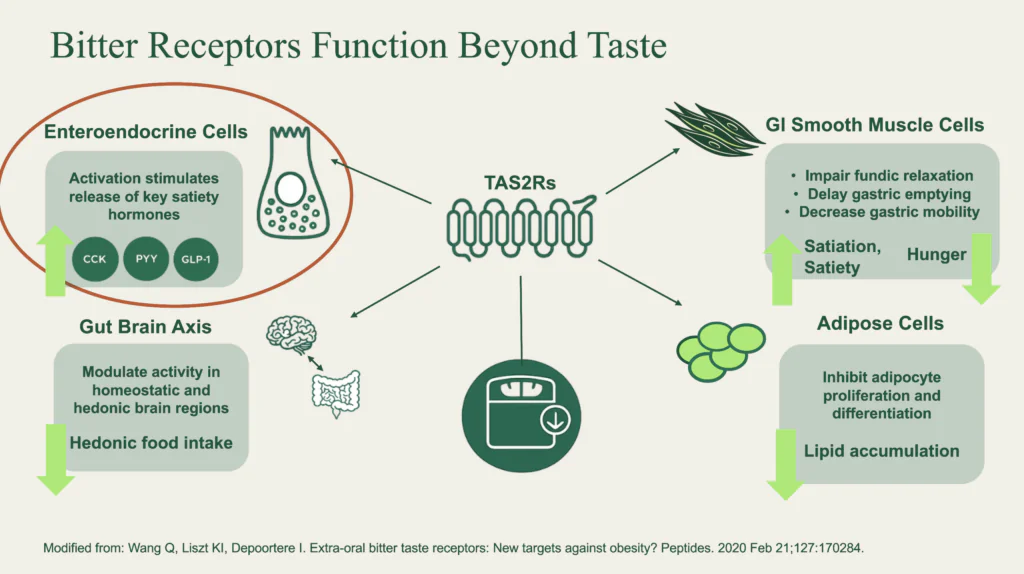
And here is where the old practice meets some fascinating modern physiology. Bitter receptors are not only on the tongue. They are found throughout the digestive tract, including on the enteroendocrine cells we met earlier. When bitter compounds encounter these receptors, they can trigger signaling involved in the release of satiety-related hormones.⁴ In a sense, the gut can “taste” bitter too, and respond. That connection has opened an interesting door for research into bitter plants and endogenous GLP-1. Two particularly intriguing examples are feverfew and hops.
Feverfew and Hops: Delivering a Bitter Signal
Feverfew (Tanacetum parthenium) gives us one intriguing example of what can happen when bitter chemistry meets the gut. Parthenolide, one of feverfew’s characteristic bitter compounds, has been shown in intestinal cells to engage bitter-receptor signaling and stimulate GLP-1 secretion.⁵ It offers a fascinating glimpse of how the bitter chemistry of feverfew may intersect with GLP-1 signaling.
Hops (Humulus lupulus) carries the story into human research. Bitter hop extracts have been associated with increases in GLP-1, CCK, and PYY, along with reductions in hunger, food cravings, and subsequent food intake.⁶˒⁷ More recent research has followed that story over a longer period, with a bitter hop extract associated with greater reductions in body weight and fat mass when paired with diet and exercise guidance.⁸
But hops has another identity that matters here. Herbalists know it not only as a bitter, but also as a calming nervine.
The Gut-Brain Connection: The Vagal Nerve Pathway to the Brain
Modern research adds an intriguing piece to that traditional picture. Hop bitter acids have been shown to increase measures of heart rate variability associated with parasympathetic, or vagal, activity.⁹ This is the familiar “rest and digest” side of autonomic physiology. Why does that matter to fullness? Because the vagus nerve is a major communication pathway between the gut and the brain.

Signals generated in the gut travel along vagal pathways to the brain. There they help communicate that food has arrived and contribute to the regulation of satiety. GLP-1, CCK, and PYY help shape the message that travels along that pathway. Research suggests that the vagus nerve helps mediate some of the effects of intestinal GLP-1 on satiation and glucose regulation.¹⁰ So fullness is not simply about whether satiety hormones are released. It is also about how their message is communicated and integrated.
That gut-brain conversation also brings our attention to the moments surrounding a meal. Sitting down to eat. Taking a breath before the first bite. Eating slowly enough to notice when satisfaction begins to arrive. Stepping away from the screen or the workday long enough to actually pay attention to the meal. These are remarkably simple practices, but they create a little more room to notice the signals of satiation as they unfold.
But there is another part of the fullness story we rarely think about: when those signals arrive.
The Body Knows What Time It Is: GLP-1 and Circadian Rhythms
Our biology keeps time. The gut, pancreas, liver, adipose tissue, and brain all have circadian clocks that help coordinate how we anticipate and respond to food across the day. Even GLP-1 secretion follows a circadian rhythm.¹¹ When we eat, it turns out, is part of the satiety story too.
Before electric lighting extended our waking hours, daylight placed more natural boundaries around when we ate. Night brought a natural pause. Today, the kitchen never really has to close. Artificial light, late-night schedules, and midnight snacking make it possible to eat at nearly any hour, while meals and sleep can shift considerably from one day to the next.
And timing is not the whole sleep story. Losing sleep itself can change the GLP-1 response surprisingly quickly. After just one sleepless night, the usual rise in GLP-1 after breakfast has been shown to arrive about 90 minutes later.¹² Even one lost night, it seems, can throw a familiar satiety messenger off schedule. So supporting the biology of fullness is not only about what lands on the plate. Regular meals, a consistent sleep-wake rhythm, morning light, enough sleep, and some breathing room between eating occasions all help restore a rhythm that modern life can easily scramble.
Go With the Flow : Physical Exercise and GLP-1 Activity
Our bodies were made to move. Regular physical activity is one of the most familiar ways to support metabolic health, and research suggests that exercise may support healthy GLP-1 activity as well.¹³ Whether it is a brisk walk, a bike ride, or simply finding more reasons to move throughout the day, movement gives us another way to support the metabolic signals involved in fullness.
But going with the flow is not always about moving more. Sometimes it means knowing when to slow down. Stress can rapidly downregulate GLP-1 expression,¹⁴ giving us another reason to make room for practices that help take the edge off the stress response. Movement, a few slow breaths, laughter, or simply sitting down long enough to enjoy a meal can all bring a little more “rest and digest” into the day.
Restoring the Conversation : Clinical Takeaways for Supporting GLP-1 Activity
Our fascination with GLP-1 may have started with a single hormone, but the biology of fullness is much bigger than GLP-1 alone. The body is continually gathering information from the protein, fiber, fats, and bitter compounds on the plate. The gut and its microbes respond, and satiety messengers such as GLP-1, CCK, and PYY join the conversation. Movement, the nervous system, and the biological rhythms all help shape how those signals are generated, communicated, and received.

Supporting that conversation can bring us back to surprisingly simple places.
- Build a meal that gives the gut something meaningful to sense.
- Bring bitter back to the palate.
- Sit down, slow down, and give yourself a chance to notice when enough begins to feel like enough.
- Prioritize sleep and keep some rhythm to meals and days.
Perhaps that is one of the gifts of our renewed fascination with GLP-1. It has given us a modern reason to rediscover the much older biology of fullness and to pay attention to the signals that have been there all along.
Did you know WholisticMatters is powered by Standard Process? Learn more about Standard Process’ whole food-based nutrition philosophy.

Supplements for Healthcare Practitioners
Join a community of 60,000+ like-minded healthcare professionals. A relationship with Standard Process offers networking opportunities, and an array of educational resources and tools to help grow your practice.
Learn more
- van der Klaauw AA, Keogh JM, Henning E, et al. High protein intake stimulates postprandial GLP1 and PYY release. Obesity (Silver Spring). 2013;21(8):1602-1607. doi:10.1002/oby.20154.
- Tolhurst G, Heffron H, Lam YS, et al. Short-chain fatty acids stimulate glucagon-like peptide-1 secretion via the G-protein-coupled receptor FFAR2. Diabetes. 2012;61(2):364-371. doi:10.2337/db11-1019.
- Hirasawa A, Tsumaya K, Awaji T, et al. Free fatty acids regulate gut incretin glucagon-like peptide-1 secretion through GPR120. Nat Med. 2005;11(1):90-94. doi:10.1038/nm1168.
- Sternini C, Rozengurt E. Bitter taste receptors as sensors of gut luminal contents. Nat Rev Gastroenterol Hepatol. 2025;22(1):39-53. doi:10.1038/s41575-024-01005-z.
- Li S, Chen Y, Song Z, et al. Parthenolide promotes glucagon-like peptide-1 secreting in human Caco-2 cells via regulation of bitter taste receptor-induced of calcium signaling. Mol Cell Biochem. 2026;481(2):775-789. doi:10.1007/s11010-025-05425-6.
- Walker EG, Lo KR, Pahl MC, et al. An extract of hops (Humulus lupulus L.) modulates gut peptide hormone secretion and reduces energy intake in healthy-weight men: a randomized, crossover clinical trial. Am J Clin Nutr. 2022;115(3):925-940. doi:10.1093/ajcn/nqab418.
- Walker E, Lo K, Gopal P. Gastrointestinal delivery of bitter hop extract reduces appetite and food cravings in healthy adult women undergoing acute fasting. Obes Pillars. 2024;11:100117. doi:10.1016/j.obpill.2024.100117.
- Walker E, Lo K, Smirk I, et al. Bitter hop nutraceutical stimulates fat mass loss while preserving muscle mass in a cohort of individuals with overweight or obesity receiving diet and exercise advice. Obes Pillars. 2026;19:100299. doi:10.1016/j.obpill.2026.100299.
- Kanatome A, Takara T, Umeda S, Ano Y. Effects of matured hop bitter acids on heart rate variability and cognitive performance: a randomized placebo-controlled crossover trial. J Funct Foods. 2023;100:105383. doi:10.1016/j.jff.2022.105383.
- Brierley DI, de Lartigue G. Reappraising the role of the vagus nerve in GLP-1-mediated regulation of eating. Br J Pharmacol. 2022;179(4):584-599. doi:10.1111/bph.15603.
- Liu C, Liu Y, Xin Y, Wang Y. Circadian secretion rhythm of GLP-1 and its influencing factors. Front Endocrinol (Lausanne). 2022;13:991397. doi:10.3389/fendo.2022.991397.
- Benedict C, Barclay JL, Ott V, Oster H, Hallschmid M. Acute sleep deprivation delays the glucagon-like peptide 1 peak response to breakfast in healthy men. Nutr Diabetes. 2013;3:e78. doi:10.1038/nutd.2013.20.
- Hamasaki H. Exercise and glucagon-like peptide-1: Does exercise potentiate the effect of treatment? World J Diabetes. 2018;9(8):138-140. doi:10.4239/wjd.v9.i8.138
- Ghosal S, Myers B, Herman JP. Role of central glucagon-like peptide-1 in stress regulation. Physiol Behav. 2013;122:201-207. doi:10.1016/j.physbeh.2013.04.003