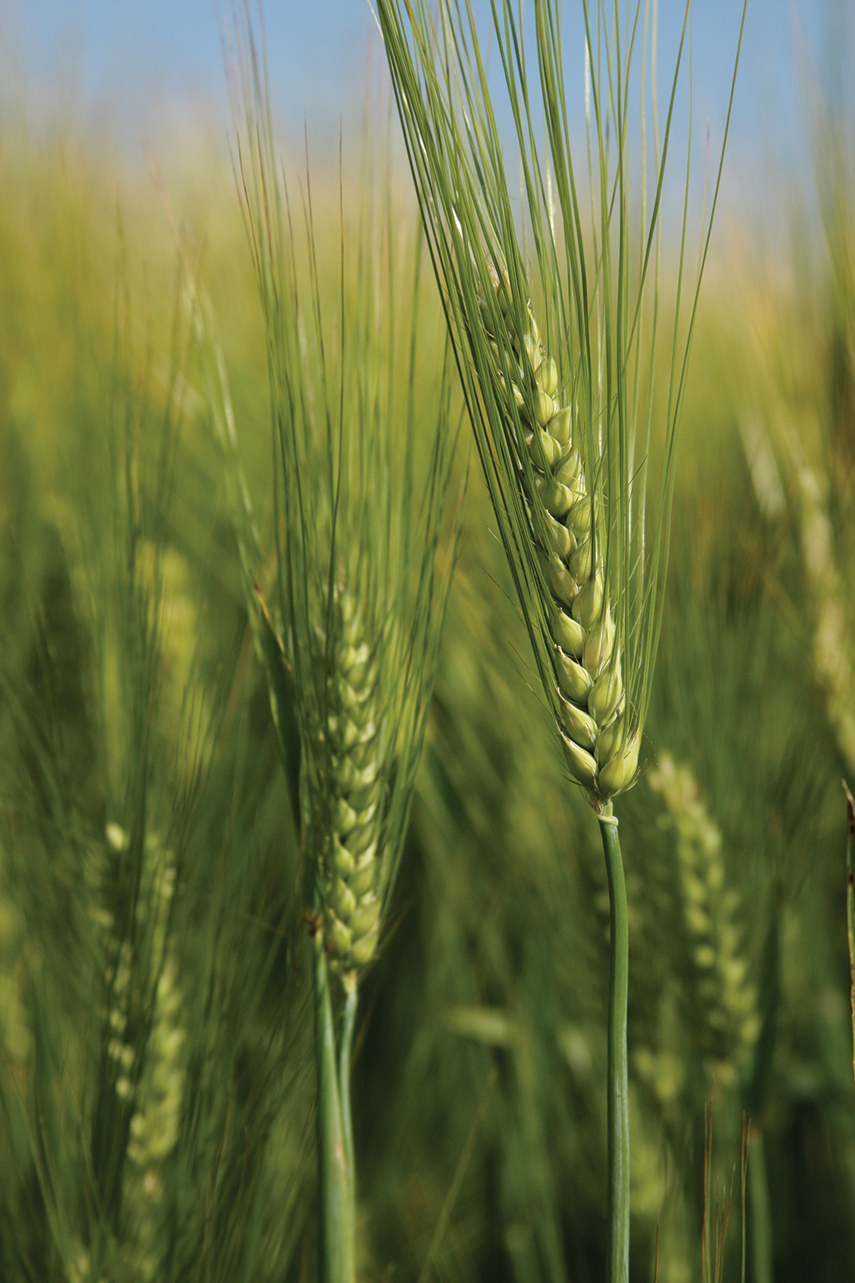
Barley Grass: Whole Food Profile
Barley (Hordeum vulgare) is grown primarily for its cereal grain, but the grass portion of the plant provides a rich source of minerals and B vitamins, like riboflavin and biotin. As part of the whole food matrix, barley grass offers a complex structure that affects the absorption of nutrients.
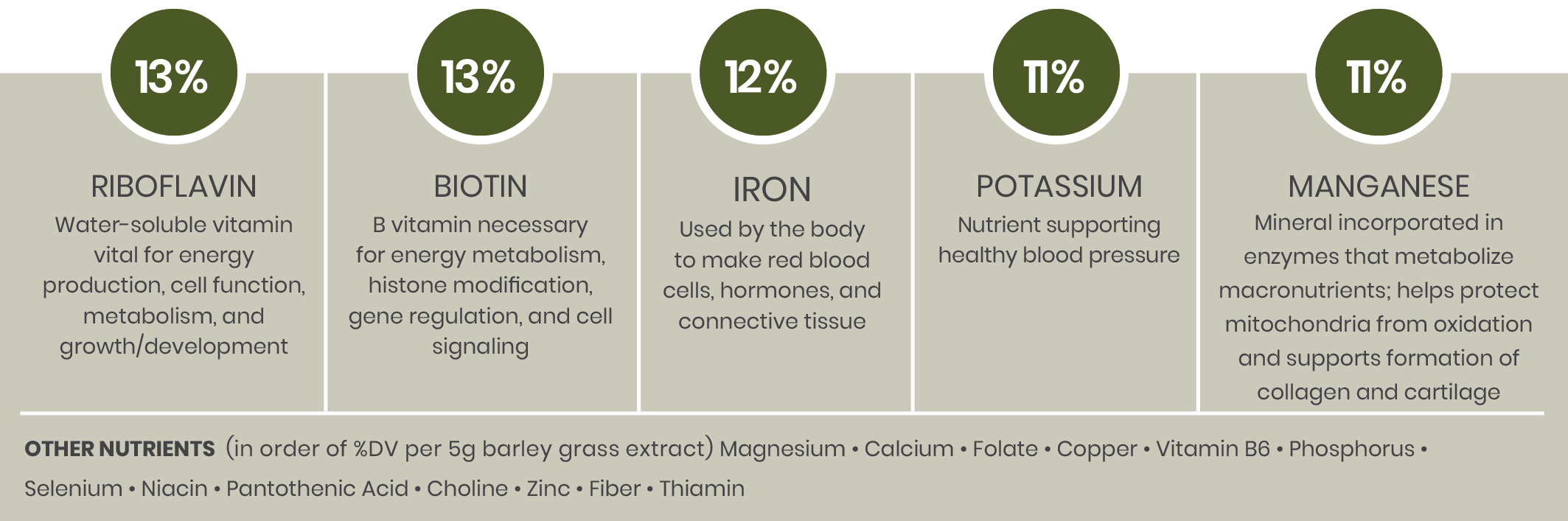
Key Nutrients
Percentages shown as %DV per serving of 5g barley grass extract.
Key Phytonutrients
Flavonoids
Compounds with anti-inflammatory, antimicrobial, and anti-cancer activity
Chlorophyll
Green pigment in plants with potential anti-inflammatory, antioxidant, and anti-bacterial activity
Fiber
Supports cardiovascular health, healthy bowel function, and healthy cholesterol levels
- Arabinoxylan
Phenolic Acids
Compounds that promote anti-oxidant activity and vascular health, supporting the traditional use of barley grass as a venous tonic
Total Phenolic Content
The high phenolic content of barley grass contributes to its powerful antioxidant capacity and ability to reduce oxidative stress, as well as its anti-inflammatory, cardioprotective, and potential anticancer benefits.
- Total Phenolics 13.5mg/g**
Supporting the traditional use of barley grass as a venous tonic. Learn more about Barley Grass and Inflammatory Balance in our research library.
*Data is mean values from Phenol-Explorer Database1
**Data on file with WholisticMatters. Values subject to change based on strain and experimental methods
Did you know WholisticMatters is powered by Standard Process? Learn more about Standard Process’ whole food-based nutrition philosophy.
Rothwell, J.A., et al., Phenol-Explorer 3.0: a major update of the Phenol-Explorer database to incorporate data on the effects of food processing on polyphenol content. Database, 2013. 2013: p. bat070-bat070.
Kim, H., H.-D. Hong, and K.-S. Shin, Structure elucidation of an immunostimulatory arabinoxylan-type polysaccharide prepared from young barley leaves (Hordeum vulgare L.). Carbohydrate polymers, 2017. 157: p. 282-293.
Byun, A.R., et al., Effects of a Dietary Supplement with Barley Sprout Extract on Blood Cholesterol Metabolism. Evidence-Based Complementary and Alternative Medicine, 2015. 2015: p. 7.
Benedet, J.A., H. Umeda, and T. Shibamoto, Antioxidant activity of flavonoids isolated from young green barley leaves toward biological lipid samples. Journal of agricultural and food chemistry, 2007. 55(14): p. 5499-5504.