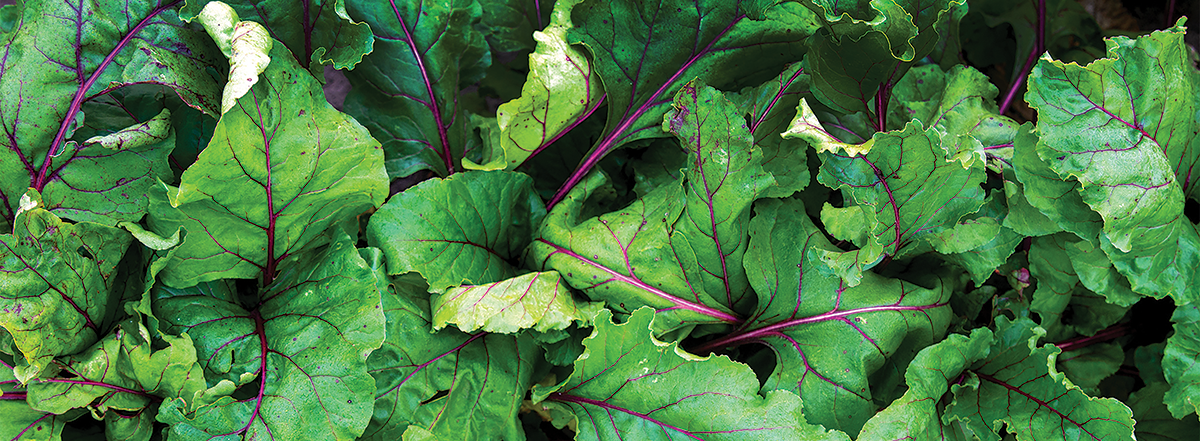
Swiss Chard: Whole Food Profile
Dark leafy greens with vibrantly colored stems and veins are trademark features of Swiss chard (Beta vulgaris L. subsp. cicla). This plant is a mineral delivery powerhouse and an essential contributor to the whole food matrix.
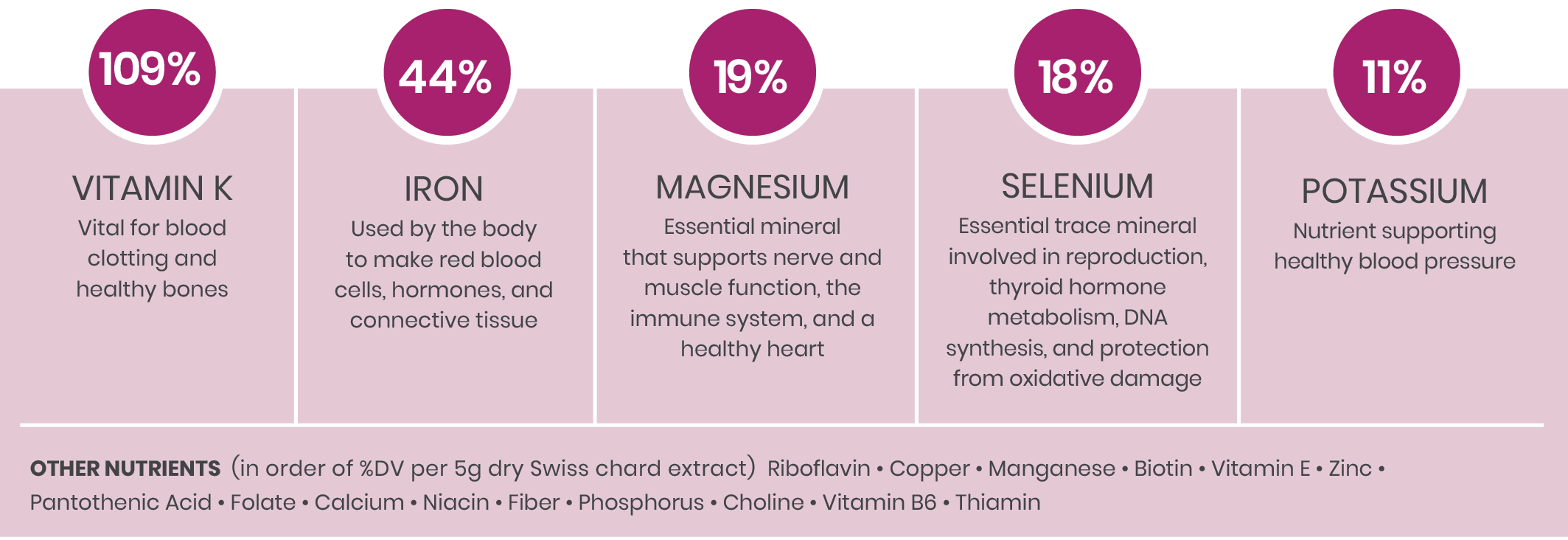
Key Nutrients
Percentages shown as %DV per serving of 5g dry Swiss chard extract.
Key Phytonutrients
Chlorophyll
Green pigment in plants with potential anti-inflammatory, antioxidant, and anti-bacterial activity
Flavonols
Promote antioxidant activity and vascular health
- Kaempferol(92 mcg/g)*
- Quercetin(75 mcg/g)*
Lignans
Polyphenolic compounds metabolized by gut bacteria that support antioxidant activity.
Betalains
Red pigments with antioxidant, anti-cancer, anti-lipidemic, and antimicrobial properties
Carotenoids
Yellow and green antioxidants with anti-cancer potential and may lower risk of macular degeneration
- Lutein (145 mg/g)**
- Zeaxanthin(10.6 mg/g)**
- Beta-carotene (52.26 mg/g)**
Total Phenolic Content
The phenolic compounds in turnip greens, including ellagic acid, support the B vitamin content in the vegetable to provide strong anti-inflammatory, cardiovascular and nervous system benefit. Explore the bioactive compounds of Swiss chard in our research library.
- Total Phenolics 16.9 mg/g**
*Data is mean values from Phenol-Explorer Database1
**Data on file with WholisticMatters. Values subject to change based on strain and experimental methods
Did you know WholisticMatters is powered by Standard Process? Learn more about Standard Process’ whole food-based nutrition philosophy.

Locate Professional Health Solutions Nearby
Looking for high-quality, practitioner-recommended health solutions? Locate authorized Standard Process practitioners in your area and gain access to premium health services to support your wellness journey.
Find A Participating Practitioner
Kugler, F., F.C. Stintzing, and R. Carle, Identification of betalains from petioles of differently colored Swiss chard (Beta vulgaris L. ssp. Cicla [L.] Alef. Cv. Bright Lights) by high-performance liquid chromatography – electrospray ionization mass spectrometry. Journal of Agricultural and Food Chemistry, 2004. 52(10): p. 2975-2981.
Rothwell, J.A., et al., Phenol-Explorer 3.0: a major update of the Phenol-Explorer database to incorporate data on the effects of food processing on polyphenol content. Database, 2013. 2013: p. bat070-bat070.