Red Clover: Whole Food Profile
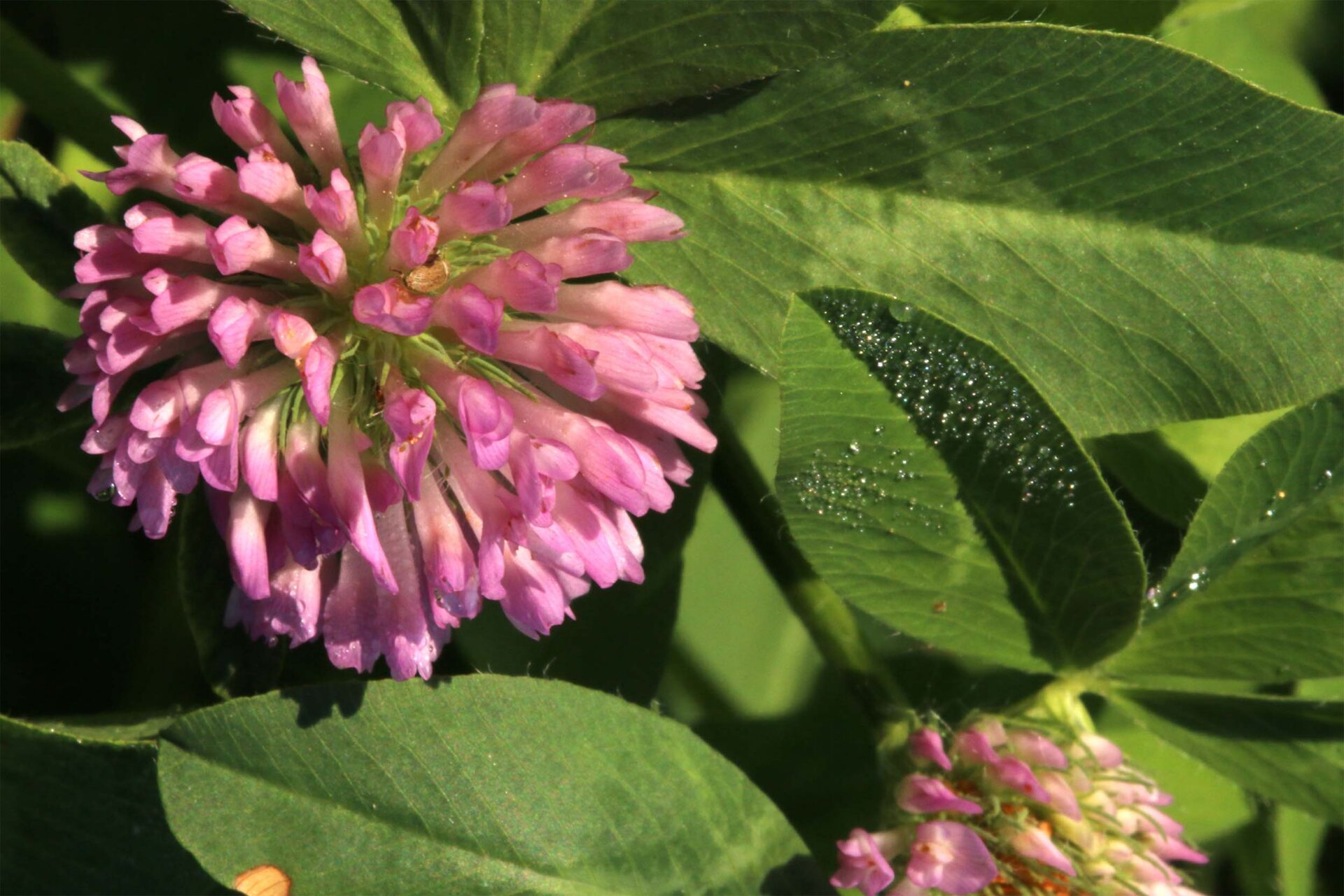
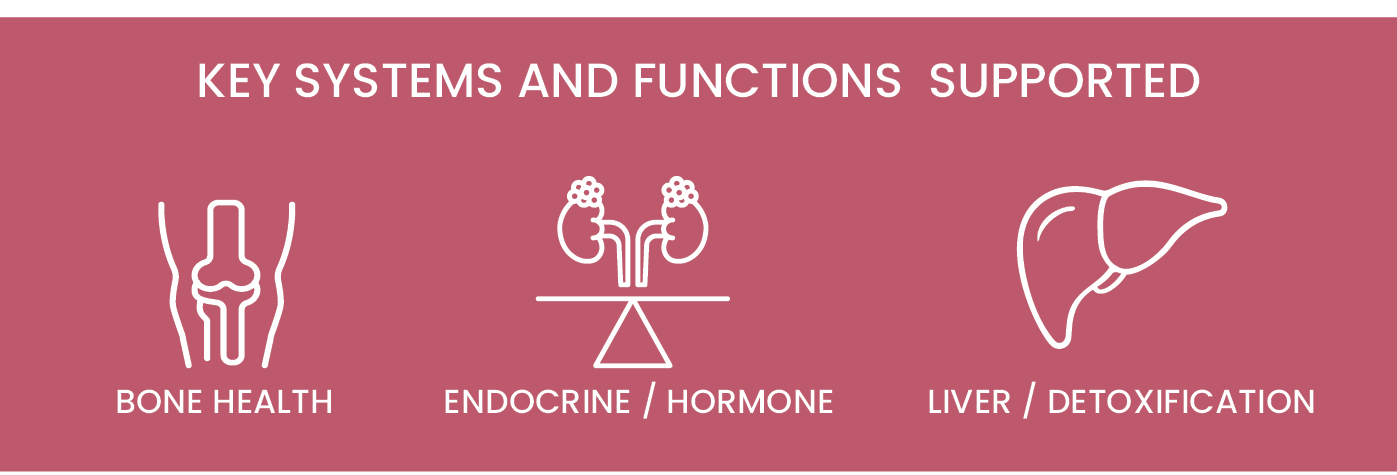
Red Clover (Trifolium pratense): used in traditional herbal medicine as an alterative and tonic, red clover is a deeply nourishing plant rich in vitamins and minerals. As a source of isoflavones that modulate estrogen, red clover is a popular remedy for supporting hormone balance and detoxification.
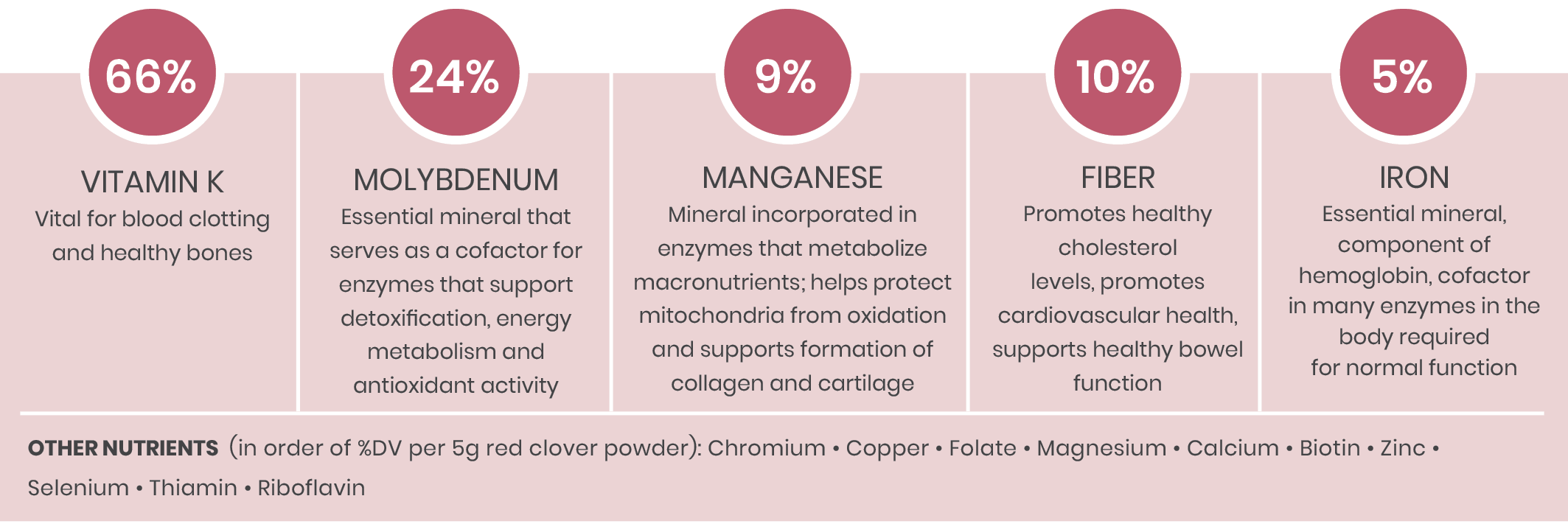
Key Nutrients
Percentages shown as %DV per serving of 5g red clover powder
Key Phytonutrients
Chlorophyll
Green pigment in plants with anti-inflammatory, antioxidant, and anti-bacterial activity
- Chlorophyll (1150 mcg/g)**
Phytosterols
Compounds that help reduce the absorption of cholesterol in the gut
Carotenoids
Antioxidants with anti-cancer potential; may lower risk of macular degeneration
- Lutein (99.7 mcg/g)**
- Zeaxanthin (9.28 mcg/g)**
- Beta-carotene (22.1 mcg/g)**
Isoflavones
Phytoestrogens are phenolic compounds that can exert mild estrogen-like activity in the body. Isoflavones—such as those found in red clover—are a well-studied class of phytoestrogens associated with support for metabolic and neuroprotective health. Red clover isoflavones may also support bone density and help manage symptoms in peri- and postmenopausal women.
Total Phenolic Content
The isoflavones and phenolic acids found in red clover are responsible for the phytoestrogenic and antioxidant benefits the plant is well known for.
- Total Phenolics 15.2mg/g**
*Data is mean values from Phenol-Explorer Database1
**Data on file with WholisticMatters. Values subject to change based on strain and experimental methods
Did you know WholisticMatters is powered by Standard Process? Learn more about Standard Process’ whole food-based nutrition philosophy.