Kale: Whole Food Profile
Kale (Brassica oleracea L. var. viridis) is a cruciferous vegetable associated with production of detoxification enzymes, antioxidant properties, anti-microbial, and anti-carcinogenic activity. Kale is a staple vegetable in healthy diets that contain glucosinolates and a concentrated punch of essential nutrients.
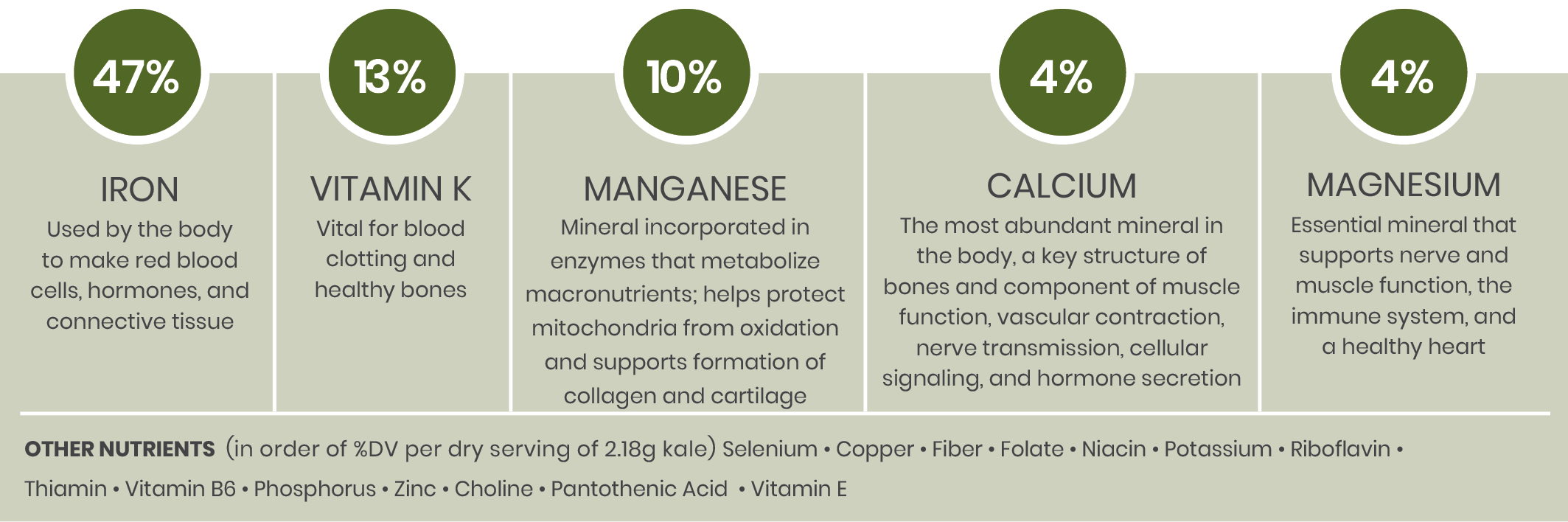
Key Nutrients
Percentages shown as %DV per dry serving of 2.18g kale (equal to 1 cup raw chopped)
Key Phytonutrients
Carotenoids
Yellow and green antioxidants with anti-cancer potential and may lower risk of macular degeneration
- Beta-carotene (4.626 mcg/g)**
- Lutein (38.4 mcg/g)**
Chlorophyll
Green pigment in plants with potential anti-inflammatory, antioxidant, and anti-bacterial activity
Lignans
Polyphenolic compounds metabolized by gut bacteria that support antioxidant activity
Myrosinase
Enzyme found in plant tissue that initiates conversion of glucosinolates to bioactive isothiocyanates
Glucosinolates
Sulfur-containing secondary metabolites found in cruciferous vegetables, associated with antioxidant activity such as cardio-protection and detoxification support.
Flavonols
Promote antioxidant activity and vascular health
- Kaempferol (267.4 mcg/g)*
- Quercetin(77.1 mcg/g)*
Total Phenolic Content
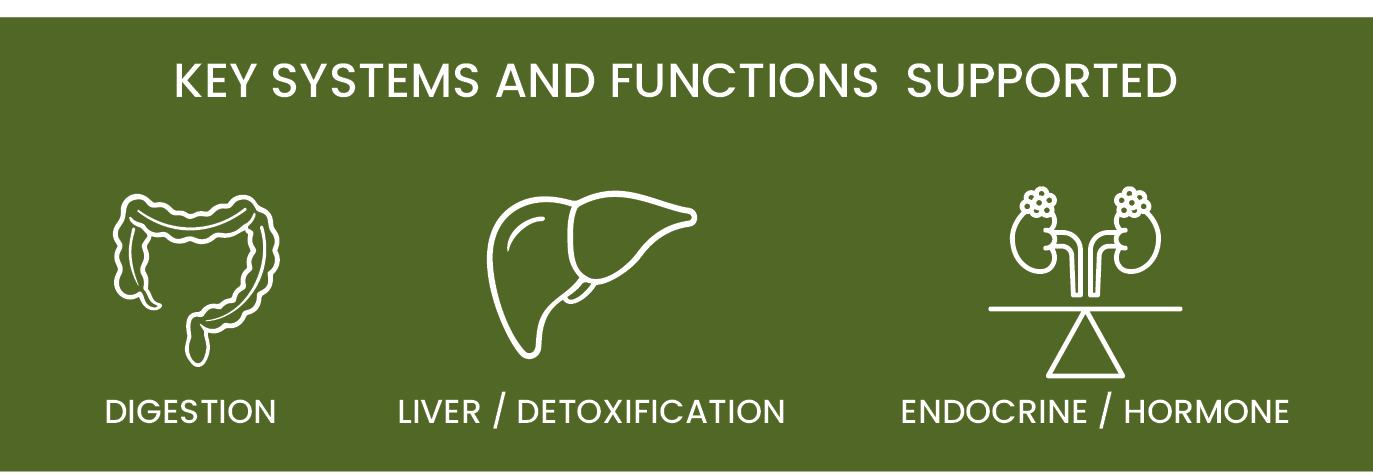
Packed with polyphenols and flavonoids, the total phenolic content in kale supports liver function, helps regulate endocrine activity, and promotes digestion through antioxidant and anti-inflammatory pathways.
- Total Phenolics 8mg/g**
*Data is mean values from Phenol-Explorer Database1
**Data on file with WholisticMatters. Values subject to change based on strain and experimental methods
Did you know WholisticMatters is powered by Standard Process? Learn more about Standard Process’ whole food-based nutrition philosophy.
Rothwell, J.A., et al., Phenol-Explorer 3.0: a major update of the Phenol-Explorer database to incorporate data on the effects of food processing on polyphenol content. Database, 2013. 2013: p. bat070-bat070.