
Color of Food
Mountain Spinach: Whole Food Profile
 Read Article
WholisticMatters
(5 min read)
Mountain Spinach (Atriplex hortensis) is the vibrant, red-hued cousin of the more common green spinach. Mineral-dense and electrolyte-rich, mountain spinach is an excellent source of numerous nutrients, particularly chromium. It is valued in traditional medicine as a spring tonic, gently stimulating the metabolism and nourishing the nervous system within the whole food matrix.
Key Nutrients
Percentages shown as %DV per serving of 5g mountain spinach powder
Key Phytonutrients
Betalains
Red and magenta betalain pigments demonstrating anti-inflammatory and cardioprotective effects
Betacyanins (amaranthins)
Anthocyanidins
Purple and red pigments concentrated in mountain spinach with strong antioxidant and anti-inflammatory activity
Cyanadin-3-Glucoside (110 mcg/g)**
Carotenoids
Antioxidants with anti-cancer potential; may lower risk of macular degeneration
Lutein (138 mcg/g)**
Beta-carotene (26.4 mcg/g)**
Zeaxanthin (6.53 mcg/g)**
Flavonols
Promote antioxidant activity and vascular health
Rutin (320 mcg/g)**
Nitrate
Supports exercise performance and cardiovascular health
33,900 mcg/g**
Total Phenolic Content
Phenolic compounds, including flavoniods and phenolic acids, work synergistically with the vitamins and minerals in mountain spinach to support insulin sensitivity, antioxidant effects and cardiovascular health. Read our comparison of mountain spinach and beetroot.
Total Phenolics 13mg/g**
*Data is mean values from Phenol-Explorer Database1
**Data on file with WholisticMatters. Values subject to change based on strain and experimental methods
Did you know WholisticMatters is powered by Standard Process? Learn more about Standard Process’ whole food-based nutrition philosophy.
Learn More About Standard Process
Collard Greens: Whole Food Profile
 Read Article
WholisticMatters
(5 min read)
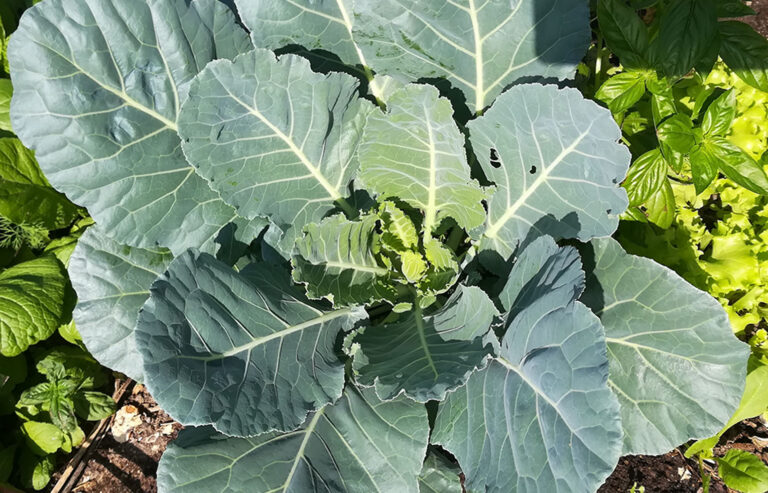
Collard Greens (Brassica oleracea var. viridis), once a common dietary staple, are nutrient-dense powerhouses, full of vitamins, minerals, antioxidants, and fiber that support digestion, immunity, and metabolic health. Collard greens are a particularly rich source of dietary folate, a key nutrient for the nervous system, reproductive health, and a concentrated contributor to the whole food matrix.
Key Nutrients
Percentages shown as %DV per serving of 5g collard green powder
Key Phytonutrients
Chlorophyll
Green pigment in plants with anti-inflammatory, antioxidant, and anti-bacterial activity
Chlorophyll (1010 mcg/g)**
Lignans
Polyphenolic compounds metabolized by gut bacteria that support antioxidant activity
Carotenoids
Antioxidants with anti-cancer potential; may lower risk of macular degeneration
Lutein (29.9 mcg/g)**
Zeaxanthin (3.36 mcg/g)**
Beta-carotene (2.43 mcg/g)**
Glucosinolates
Sulfur-containing secondary metabolites found in cruciferous vegetables, associated with antioxidant activity such as cardio-protection and liver detoxification support effects.
Total Phenolic Content
The unique blend of phenolic compounds work synergistically with the vitamins and minerals in collard greens to lower cardiovascular risk, support detoxification pathways and improve nervous system function. Explore more on preventing and managing inflammation through nutrition.
Total Phenolics 13.5mg/g**
*Data is mean values from Phenol-Explorer Database1
**Data on file with WholisticMatters. Values subject to change based on strain and experimental methods
Did you know WholisticMatters is powered by Standard Process? Learn more about Standard Process’ whole food-based nutrition philosophy.
Learn More About Standard Process
Royal Ancient Oats™: Whole Food Profile
 Read Article
WholisticMatters
(5 min read)
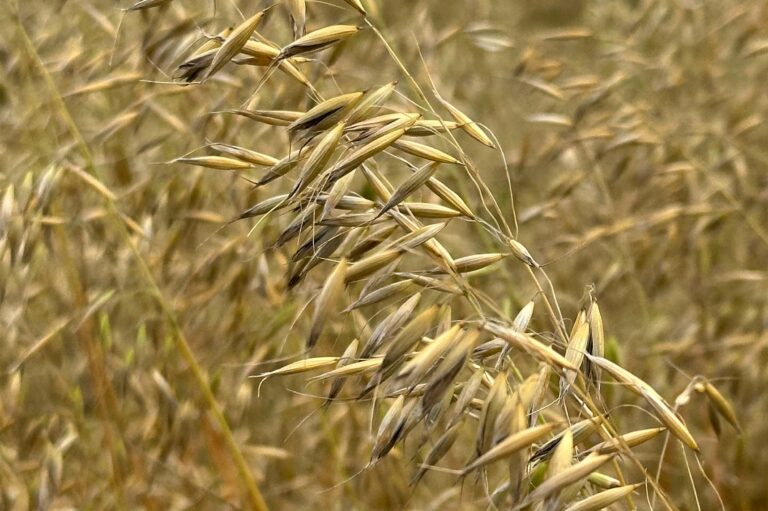
Royal Ancient OatsTM (Avena strigosa) are a unique strain of oats exclusive to Standard Process. Derived from wild ancestral variants, ancient oats are rich in naturally occurring phytonutrients, fiber, and essential minerals. Wild oats demonstrate a higher protein content than their domestic counterparts, and may contribute greater beta-glucan content to support cardiovascular, digestive, and metabolic health as a foundational part of the whole food matrix.
Key Nutrients
Percentages shown as %DV per 30g Royal Ancient Oat™ Flour powder
Key Phytonutrients
Avenanthromides
Phenolic acids exclusive to oats with strong antioxidant and anti-inflammatory activities, particularly in the cardiovascular and bitter effect
Royal Ancient OatsTM contain from 861% - 1500% more avenanthromides than conventional oats
Avenanthramide A B, and C (158.3 mcg/g)**
Beta-glucan
Supports cardiovascular health, healthy bowel function, metabolic health, healthy cholesterol levels, and increases satiety.
Beta-glucan (42,000 mcg/g)**
Total Phenolic Content
The unique complex of phenolic compounds found in Royal Ancient Oats™, including avenanthromides, contribute to the profound cardiovascular, immune, digestive and metabolic health benefits associated with this specific oat strain. Discover more in our article on the health benefits of oats.
Total Phenolics 2mg/g**
*Data is mean values from Phenol-Explorer Database1
**Data on file with WholisticMatters. Values subject to change based on strain and experimental methods
Did you know WholisticMatters is powered by Standard Process? Learn more about Standard Process’ whole food-based nutrition philosophy.
Learn More About Standard Process
Kale: Whole Food Profile
 Read Article
WholisticMatters
(5 min read)
Kale (Brassica oleracea L. var. viridis) is a cruciferous vegetable associated with the production of detoxification enzymes, antioxidant properties, anti-microbial, and anti-carcinogenic activity. Kale is a staple vegetable in healthy diets, rich in glucosinolates and a concentrated punch of essential nutrients as part of the whole-food matrix.
Key Nutrients
Percentages shown as %DV per dry serving of 2.18g kale (equal to 1 cup raw chopped)
Key Phytonutrients
Carotenoids
Yellow and green antioxidants with anti-cancer potential and may lower risk of macular degeneration
Beta-carotene (4.626 mcg/g)**
Lutein (38.4 mcg/g)**
Chlorophyll
Green pigment in plants with potential anti-inflammatory, antioxidant, and anti-bacterial activity
Lignans
Polyphenolic compounds metabolized by gut bacteria that support antioxidant activity
Myrosinase
Enzyme found in plant tissue that initiates conversion of glucosinolates to bioactive isothiocyanates
Glucosinolates
Sulfur-containing secondary metabolites found in cruciferous vegetables, associated with antioxidant activity such as cardio-protection and detoxification support. Explore the comparison of Kale vs. Brussels Sprouts for more phytonutrient insights.
Flavonols
Promote antioxidant activity and vascular health
Kaempferol (267.4 mcg/g)*
Quercetin(77.1 mcg/g)*
Total Phenolic Content
Packed with polyphenols and flavonoids, the total phenolic content in kale supports liver function, helps regulate endocrine activity, and promotes digestion through antioxidant and anti-inflammatory pathways.
Total Phenolics 8mg/g**
*Data is mean values from Phenol-Explorer Database1
**Data on file with WholisticMatters. Values subject to change based on strain and experimental methods
Did you know WholisticMatters is powered by Standard Process? Learn more about Standard Process’ whole food-based nutrition philosophy.
Learn More
Buckwheat: Whole Food Profile
 Read Article
WholisticMatters
(5 min read)
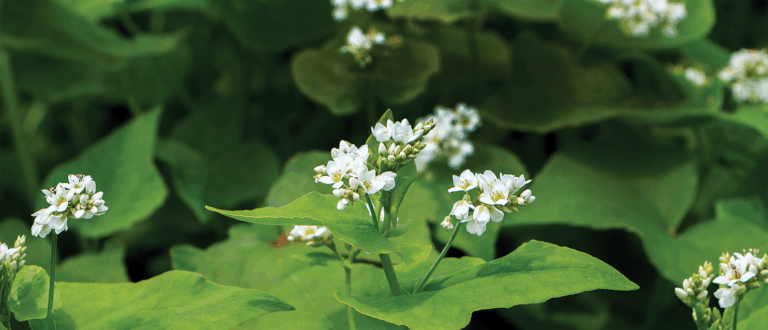
The common buckwheat (Fagopyrum esculentum) plant is a pseudo-cereal grown for its unique ability to out-compete other plants for sun, soil, and water. It packs these nutrients into leaves, stems, flowers, and fruits. The fruits are a grain-like staple, and juice from the plant material contains essential nutrients and bioactive compounds that contribute to the whole food matrix.
Key Nutrients
Percentages shown as %DV per serving of 5g buckwheat juice extract.
Key Phytonutrients
Carotenoids
Yellow antioxidants with anti-cancer potential and may lower risk of macular degeneration
Beta-carotene (52.26 mg/g)*
Lutein (61.2 mcg/g)**
Zeaxanthin (6.0 mcg/g)**
Anthocyanidins
Purple and red pigments concentrated in buckwheat stems with strong antioxidant and anti-inflammatory activity
Flavonols
Promote antioxidant activity and vascular health
Rutin (12,000 mcg/g)**
Quercetin (2,760 mcg/g)**
Total Phenolic Content
Total phenolic content, including rutin and other flavonoids, supports cardiovascular and circulatory function, aids immune defense, and liver detoxification. Learn more about Buckwheat and Swiss Chard synergy in our research library.
Total Phenolics 49.8mg/g**
*Data is mean values from Phenol-Explorer Database1
**Data on file with WholisticMatters. Values subject to change based on strain and experimental methods
Did you know WholisticMatters is powered by Standard Process? Learn more about Standard Process’ whole food-based nutrition philosophy.
Learn More
Download PDF
Alfalfa: Whole Food Profile
 Read Article
WholisticMatters
(8 min read)
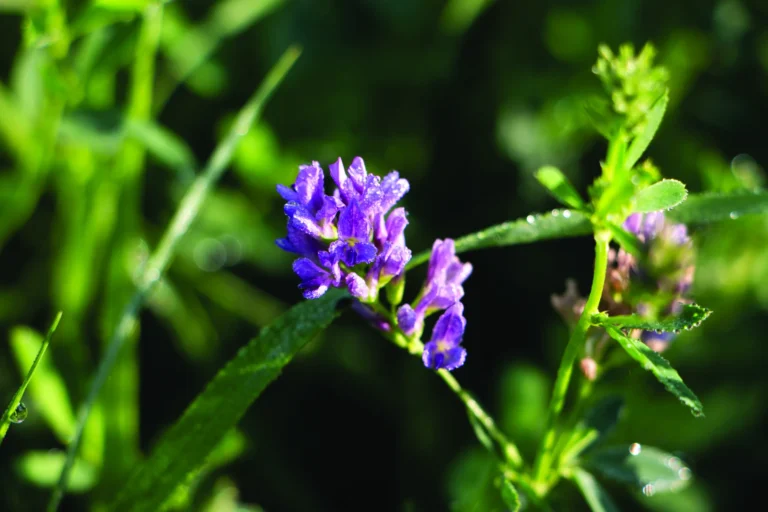
The alfalfa plant (Medicago sativa Linn.) is grown for its unique blend of protein, B vitamins, and minerals. As part of the whole food matrix, it is a perennial flowering legume widely grown across the world. The sprouts and whole plant material can be used to deliver essential nutrients and phytoactive compounds.
Key Nutrients
Percentages shown as %DV per serving of 5g alfalfa juice extract.
Key Phytonutrients
Flavones
Compounds with anti-inflammatory, antimicrobial, and anti-cancer activity
Chlorophyll
Green pigment in plants with anti-inflammatory, antioxidant, and anti-bacterial activity
Carotenoids
Antioxidants with anti-cancer potential; may lower risk of macular degeneration
Saponins
Support the immune system, healthy cholesterol levels, and blood glucose levels
Flavonols
Promote antioxidant activity and vascular health
Quercetin (17 mcg/g)*
Explore more holistic health strategies and botanical profiles in our resource library.
Total Phenolic Content
Alfalfa’s rich phenolic composition contributes to the plant’s antioxidant properties which helps to counteract oxidative damage in the body. These effects are associated with its therapeutic potential, including anti-inflammatory activity and support for cardiovascular and overall health.
Total Phenolics 13.5mg/g*
*Data is mean values from Phenol-Explorer Database1
**Data on file with WholisticMatters. Values subject to change based on strain and experimental methods
Did you know WholisticMatters is powered by Standard Process? Learn more about Standard Process’ whole food-based nutrition philosophy.
Learn More
WholisticMatters
(5 min read)
Mountain Spinach: Whole Food Profile
WholisticMatters
(5 min read)
Collard Greens: Whole Food Profile
WholisticMatters
(5 min read)
Royal Ancient Oats™: Whole Food Profile
WholisticMatters
(5 min read)
Kale: Whole Food Profile
WholisticMatters
(5 min read)
Buckwheat: Whole Food Profile
WholisticMatters
(8 min read)
Alfalfa: Whole Food Profile
WholisticMatters
(5 min read)
Mountain Spinach: Whole Food Profile
WholisticMatters
(5 min read)
Collard Greens: Whole Food Profile
WholisticMatters
(5 min read)
Royal Ancient Oats™: Whole Food Profile
WholisticMatters
(5 min read)
Kale: Whole Food Profile
WholisticMatters
(5 min read)
Buckwheat: Whole Food Profile
WholisticMatters
(8 min read)
Alfalfa: Whole Food Profile