Mountain Spinach: Whole Food Profile
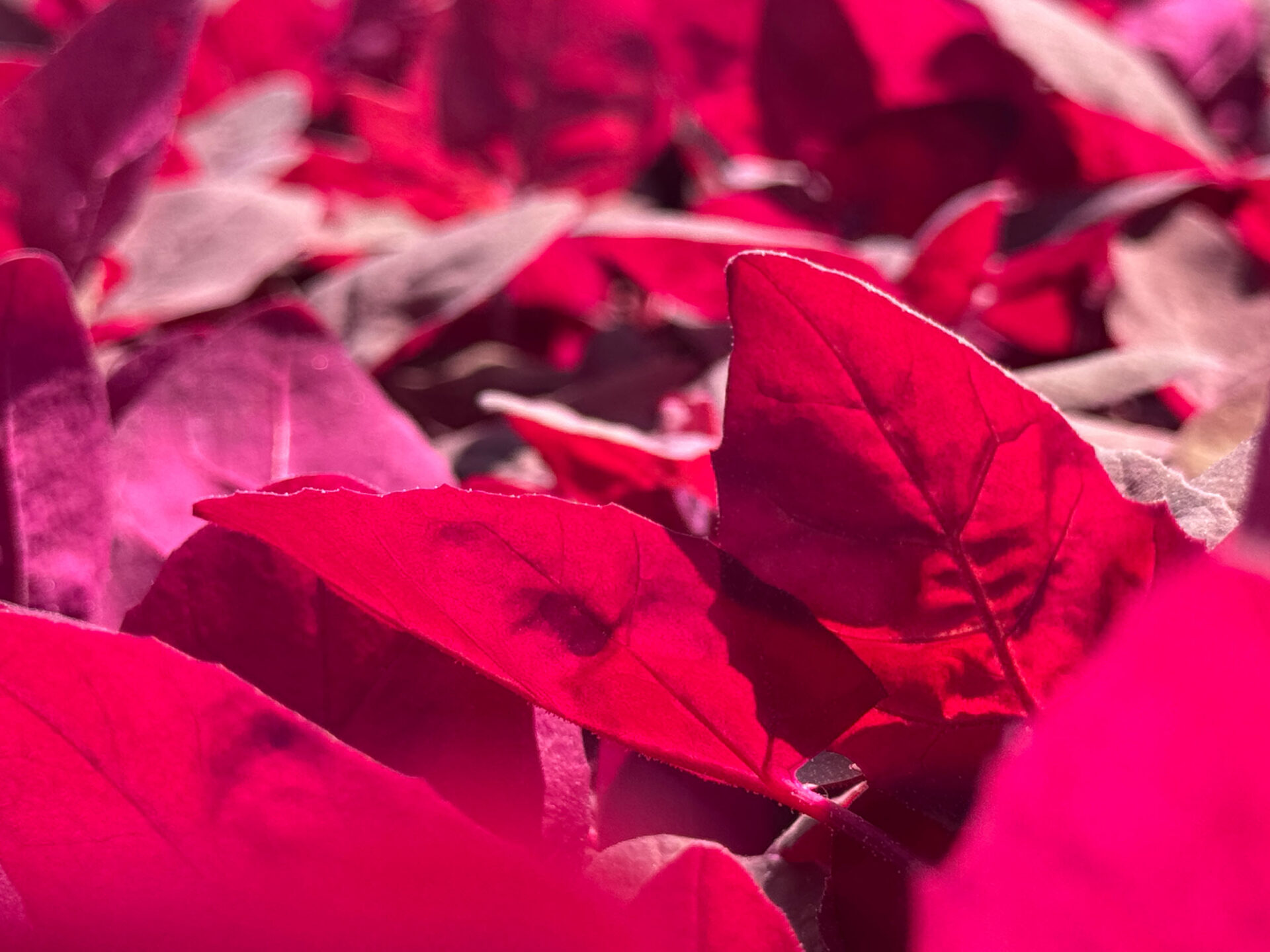
Mountain Spinach (Atriplex hortensis) is the vibrant, red-hued cousin of the more common green spinach. Mineral-dense and electrolyte-rich, mountain spinach is an excellent source of numerous nutrients, particularly chromium. It is valued in traditional medicine as a spring tonic, gently stimulating the metabolism and nourishing the nervous system within the whole food matrix.
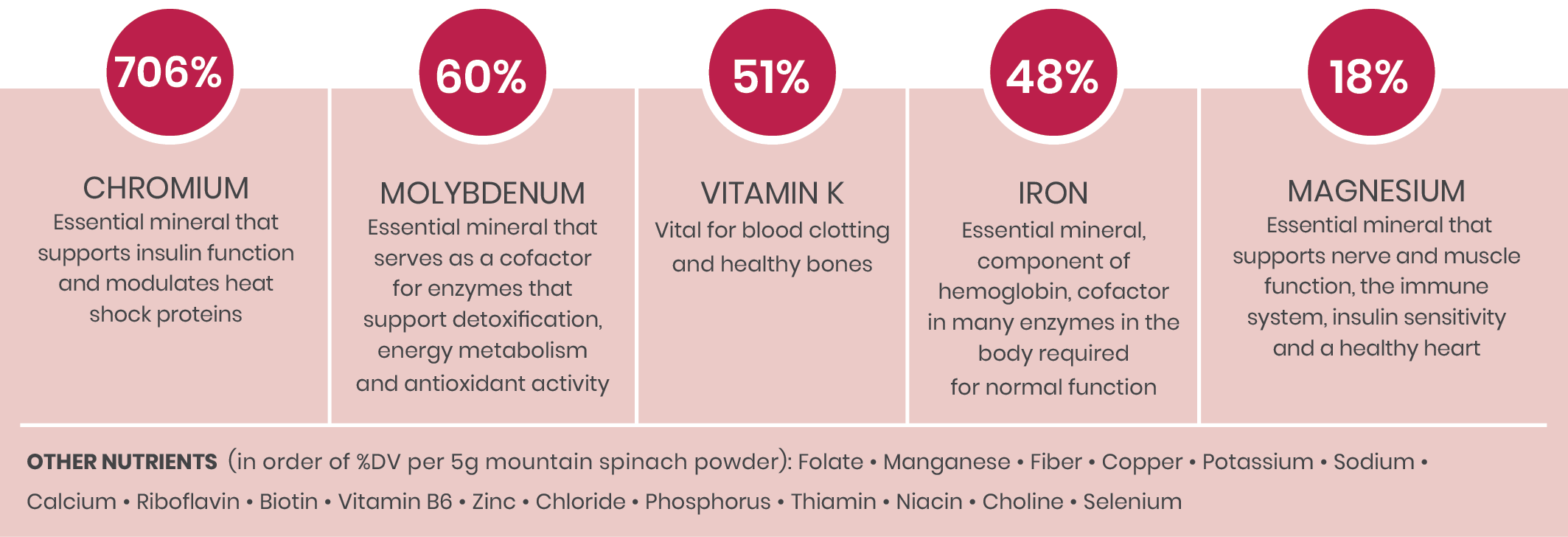
Key Nutrients
Percentages shown as %DV per serving of 5g mountain spinach powder

Key Phytonutrients
Betalains
Red and magenta betalain pigments demonstrating anti-inflammatory and cardioprotective effects
- Betacyanins (amaranthins)
Anthocyanidins
Purple and red pigments concentrated in mountain spinach with strong antioxidant and anti-inflammatory activity
- Cyanadin-3-Glucoside (110 mcg/g)**
Carotenoids
Antioxidants with anti-cancer potential; may lower risk of macular degeneration
- Lutein (138 mcg/g)**
- Beta-carotene (26.4 mcg/g)**
- Zeaxanthin (6.53 mcg/g)**
Flavonols
Promote antioxidant activity and vascular health
- Rutin (320 mcg/g)**
Nitrate
Supports exercise performance and cardiovascular health
- 33,900 mcg/g**
Total Phenolic Content
Phenolic compounds, including flavoniods and phenolic acids, work synergistically with the vitamins and minerals in mountain spinach to support insulin sensitivity, antioxidant effects and cardiovascular health. Read our comparison of mountain spinach and beetroot
.
- Total Phenolics 13mg/g**
*Data is mean values from Phenol-Explorer Database1
**Data on file with WholisticMatters. Values subject to change based on strain and experimental methods
Did you know WholisticMatters is powered by Standard Process? Learn more about Standard Process’ whole food-based nutrition philosophy.